Korean Glass Facial Plans Start With Four Skin Readings
 Dr. Jong Seon Kim · Director, Gangnam HERA7 min readLast updated

On this page
A Korean glass facial, done in a clinic, is a short plan rather than one product: cleansing and hydration, then often one injected or needle-based step from a skin-booster menu, aimed at skin that reflects light evenly. Which step, if any, depends on how oily, sensitive, pigment-prone and fine-lined your skin is. Those readings decide what is realistic and how many visits it takes.
If you've wanted that glass-skin look for years but kept putting it off, because needles make you uneasy or because you worry about being talked into extra steps in a language you don't speak, start with the readings below.
The four skin readings behind a glass-skin plan
Four pairs decide the plan: oily or dry, sensitive or resistant, pigmented or not, wrinkled or tight. Dermatologist Leslie Baumann summarized these axes in Dermatologic Clinics in 2008 as a way to match skin care to skin; combined, they give 16 types.
Glass skin is mostly a light effect. Light reflects evenly off a surface that is hydrated, smooth and one color. Each reading spoils that in its own way: dryness makes the surface scatter light, rough texture and open pores break it up, patches of pigment interrupt it, and fine lines cast small shadows.
| Reading | What it tells the doctor | What it usually changes in the plan |
|---|---|---|
| Oily or dry | The water and oil the surface holds | Dry skin leans toward hydration; oily skin may need texture work as well as, or more than, moisture |
| Sensitive or resistant | How easily the skin reddens, stings or flares | Sensitive skin gets fewer steps and longer gaps between sessions |
| Pigmented or not | Whether the skin tends to darken after irritation | Pigment-prone skin needs lower intensity, because inflammation can leave brown marks |
| Wrinkled or tight | Fine lines and thinning | Collagen-stimulating boosters, which change skin over weeks, come into the discussion |
Readings are not fixed. Seasons, climate and hormones can shift oil and sensitivity, so skin assessed in a humid Seoul summer may behave differently at home in winter. Our AI skin analysis page describes 3D facial mapping alongside the Baumann system of 16 skin types. Treat a scan as the start of the conversation; the in-person exam still decides.
Who suits a clinic glass facial, and when is a home routine enough?
A clinic plan suits dull, dehydrated skin with fine texture or early fine lines, in someone who can spend a few days in Seoul. If your main problem is daily dryness, or irritation from scrubbing too often, a simpler home routine usually comes first.
It's reasonable to wait if any of these apply:
- an active acne flare or any infection near the area, including a cold sore
- pregnancy or breastfeeding, when elective injections are usually postponed
- a history of keloids or raised scarring
- recent oral isotretinoin, or a past reaction to an injected skin product
- an expectation that one session will match an edited photo
Home kits and serums work on the surface, and that has a physical reason. Bos and Meinardi's 500 Dalton rule describes how compounds generally need a molecular weight under about 500 Da to pass through intact skin, and skincare hyaluronic acid is usually far larger than that.
It can still hold water on the surface, which is why moisturizer still matters. The American Academy of Dermatology advises matching exfoliation to your skin type, being gentle and following with moisturizer; over-exfoliated skin is one of the most common reasons a 'glow' routine backfires.
Some concerns are not surface questions at all. A deep fold beside the mouth is about volume, which our guide to filler for nasolabial folds covers. Stubborn spots are a pigment question, discussed in our pico laser guide.
What happens during a clinic glass-facial session?
A session usually has four parts: consultation and skin assessment, cleansing, numbing for any needle step, then the treatment itself, followed by aftercare instructions. Which treatment, if any, comes out of the consultation, not the booking form.
At HERA, a dermatologist and a plastic surgeon see you together, so two disciplines meet in one consultation. Topical numbing cream is commonly applied before needle-based steps and needs time to work, so the session is longer than the injecting part.
The options on our treatment menu that come up in glass-skin conversations are different tools:
- HILO WAVE Skin Booster is a dual hyaluronic acid booster aimed at overall skin quality. It is listed with our skin boosters, so it is an injected step rather than a spa-style facial; whether it fits your readings is a consultation question.
- Rejuran is a polynucleotide skin booster. A systematic review in the Journal of Cosmetic Dermatology reported positive findings for polynucleotides in esthetic use, with the evidence still coming mostly from smaller studies.
- Juvelook is a poly-lactic-acid-based booster that works by stimulating collagen gradually, so its change is slower.
- Potenza Exosome pairs radiofrequency microneedling with an exosome product, aimed more at texture and pores.
One of the lectures listed on our doctors' page is titled 'Still Rejuran in the Era of Skin-Booster Saturation'. The title says something useful for patients: there are more booster brands than reasons to use them, and a plan should name one reason per step.
Who holds the needle at HERA?
At HERA the head doctor diagnoses your face and skin and performs every step, with no hand-off to a junior. Our fillers and wrinkle-relaxing injections come in sealed packaging and are shown to you before use; for any booster, ask to see the box and label as well.
My credentials, as listed on our doctor page, include Board Member of the Korean Society of Aesthetic Surgery (KSAS), Board Member of the International Petit Medical Society and Full Member of the Korean Society of Oculoplastic Surgery. HERA has three plastic surgeons (Dr. Jong Seon Kim, Dr. Jong Hoon Lee and Dr. Jin Yi Han) and is registered with Korea's Ministry of Health and Welfare as a medical institution for international patients. Consultations can run with an English interpreter.
Three questions worth asking anywhere, including here: what is the product and who makes it, how deep and how many points will it go, and what happens if a bruise or lump appears before you fly.
Side effects and risks of injected skin boosters
Most problems are small and temporary: redness, swelling, pinpoint bumps and bruising. Rare problems can be serious, which is why a doctor-led injection matters even when the treatment is marketed as a facial.
For injected fillers, the U.S. Food and Drug Administration lists common effects such as bruising, redness, swelling, pain, tenderness, itching and rash. It also warns of rare but serious events when product enters a blood vessel, including skin damage, vision problems and stroke. Skin boosters are placed shallowly and in small amounts, but the same anatomy applies.
Other risks to weigh:
- Pigment change. Pigment-prone skin can darken after inflammation, more often after needle or heat-based steps.
- Reactions to the product. Any injected material can cause lumps or prolonged inflammation in some people.
- Exosome products. The FDA has warned that no exosome products are FDA-approved in the United States. Ask what the product is and how it is approved where you're treated.
How your skin responds varies from person to person, and the in-person exam is what decides whether any step is suitable.
Book a consultation
Send us your question or a photo on WhatsApp and we will reply in English.
How red will you be, and when can you fly?
For most hydration-type booster sessions, visible marks fade within days, but bruises can take a week or more. Plan the timing around your skin, not around a flight.
- Same day: small raised bumps at injection points, redness and some tightness are common. Most people skip makeup for the rest of the day.
- Day 3: bumps have usually flattened and redness has settled for many people; a bruise, if there is one, may now be at its most visible.
- Day 7: most bruises are fading. Collagen-type boosters change skin over weeks, so the look keeps developing after you're home.
Before you fly
Avoid booking a needle-based step for the day before your flight. A few days in Seoul afterwards means that if something unexpected appears, you're still close to the clinic.
Visiting HERA in Gangnam
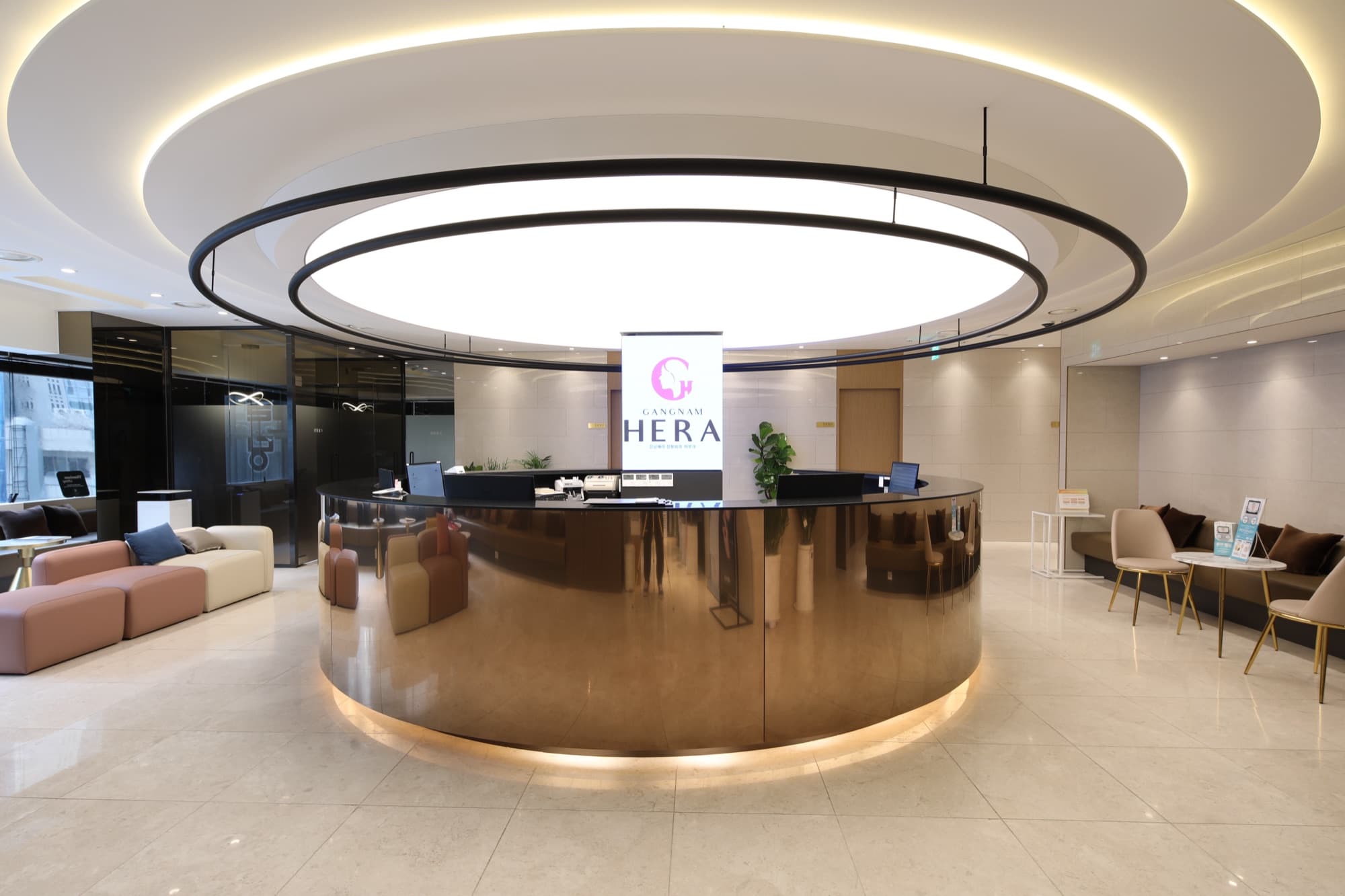
HERA is at 4F, 9 Seocho-daero 73-gil, Seocho-gu, Seoul, a 3-minute walk from Gangnam Station Exit 9. Consultations are available with an English interpreter.
Hours are Monday and Friday 10:00–20:00, Tuesday to Thursday 10:00–19:00 and Saturday 10:00–17:00, with lunch from 13:00 to 14:00. We're closed on Sundays and public holidays. The full treatment list is on our Gangnam HERA homepage.
If you're still unsure whether your skin needs a clinic at all, send one thing on WhatsApp: a daylight photo of your bare skin, front and both sides, with a short note on any product that has stung or broken you out, so the conversation starts from your actual skin rather than a filtered photo. Waiting, or a home routine first, can be the outcome.
FAQ
Frequently asked questions
Q1Does a Korean glass facial hurt?
The cleansing and hydration steps feel like an ordinary facial. Needle-based booster steps feel like quick pricks, and numbing cream is commonly applied first to take the edge off. Sensitivity differs between people and between areas of the face.Q2How many sessions does glass skin take?
It depends on the readings and the product. Hydration-type boosters can show a change sooner, while collagen-stimulating boosters work over weeks and are often planned as a course. The doctor sets the number after the in-person exam.Q3Should I stop retinol or exfoliating acids before treatment?
Many doctors ask patients to pause strong actives such as retinoids and exfoliating acids for a few days either side of needle-based steps, because irritated skin reacts more. Tell the doctor exactly what you use so the timing can be set for your skin.Q4Can I combine a glass facial with filler on the same trip?
It can be discussed in the same consultation. The doctor decides the order and spacing, because both can bruise and swell. Leave extra days in Seoul if you plan more than one injected treatment.Q5Is a glass facial suitable for darker skin tones?
It can be, but pigment-prone skin is more likely to darken after inflammation. That usually means gentler settings, fewer steps per session and careful sun protection afterwards. The exam decides what intensity is reasonable.
เรื่องจริงจากผู้ป่วย
เสียงจากผู้ป่วยของเรา
วิดีโอที่ผู้ป่วยจากต่างประเทศโพสต์ไว้




บน YouTube
ฟังจากแพทย์ก่อนเดินทาง
แพทย์ของเราอธิบายทรีตเมนต์หลักของ HERA ได้แก่ ยกกระชับ ฟิลเลอร์ และสกินบูสเตอร์ ผ่านวิดีโอ เพื่อให้คุณรู้ว่าจะได้พบใครและแพทย์คิดอย่างไร ก่อนที่คุณจะเดินทางถึงโซล
เสียงภาษาเกาหลี · มีคำบรรยายแปลอัตโนมัติบน YouTube
- 6:24ฟิลเลอร์

 Dr. Jong · Dr. Jong
- 7:36คลินิกและแพทย์Dr. Jong · Dr. Jong
- 8:07ยกกระชับDr. Jong
- 5:44ยกกระชับDr. Jong · Dr. Jong
Shorts
คำถามเดียว ไม่ถึงหนึ่งนาที
HERA TV
The doctors explain it on camera — then in writing
Each piece is written by the doctor from their own YouTube video: the patient question, why it happens and how we approach it.
 6:24korean plla filler
Korean PLLA Filler? Filler vs Collagen Booster vs Skin Booster
Dr. Jong Seon Kim7 min read 4:21neck line filler
Neck Line Filler: One Treatment, Start to Follow-Up
 Dr. Jin Yi Han6 min read
 5:39korean skin booster
Korean Skin Booster: How to Choose by Your Skin's Main Problem
Dr. Jong Seon Kim7 min read
HERA Journal
Keep reading
 Skin boosters
How Long Does Rejuran Take? Chair Time, Bumps and Trip Days
A Rejuran visit usually takes half a day at most, and the small injection bumps typically flatten within one to three days. The full course takes longer: sessions are spaced two to four weeks apart.
8 minRead →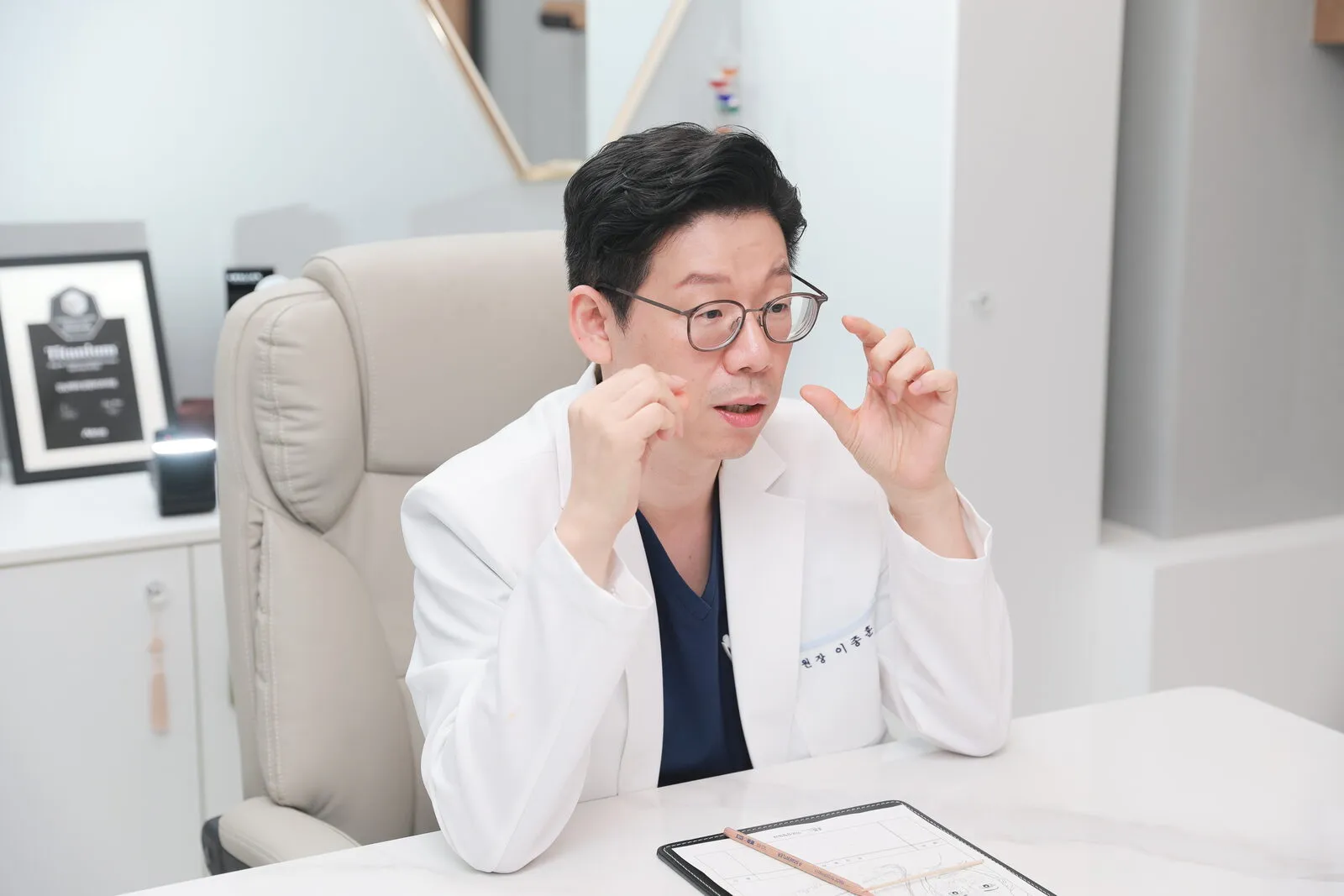 Skin boosters
When Does Rejuran Start to Show? Bumps, Weeks and Your Flight
Rejuran's injection bumps usually settle in a day or two and hydration often shows within weeks, while texture changes build over a course. Dr. Jong Seon Kim on which day of your Seoul stay to book it.
8 minRead →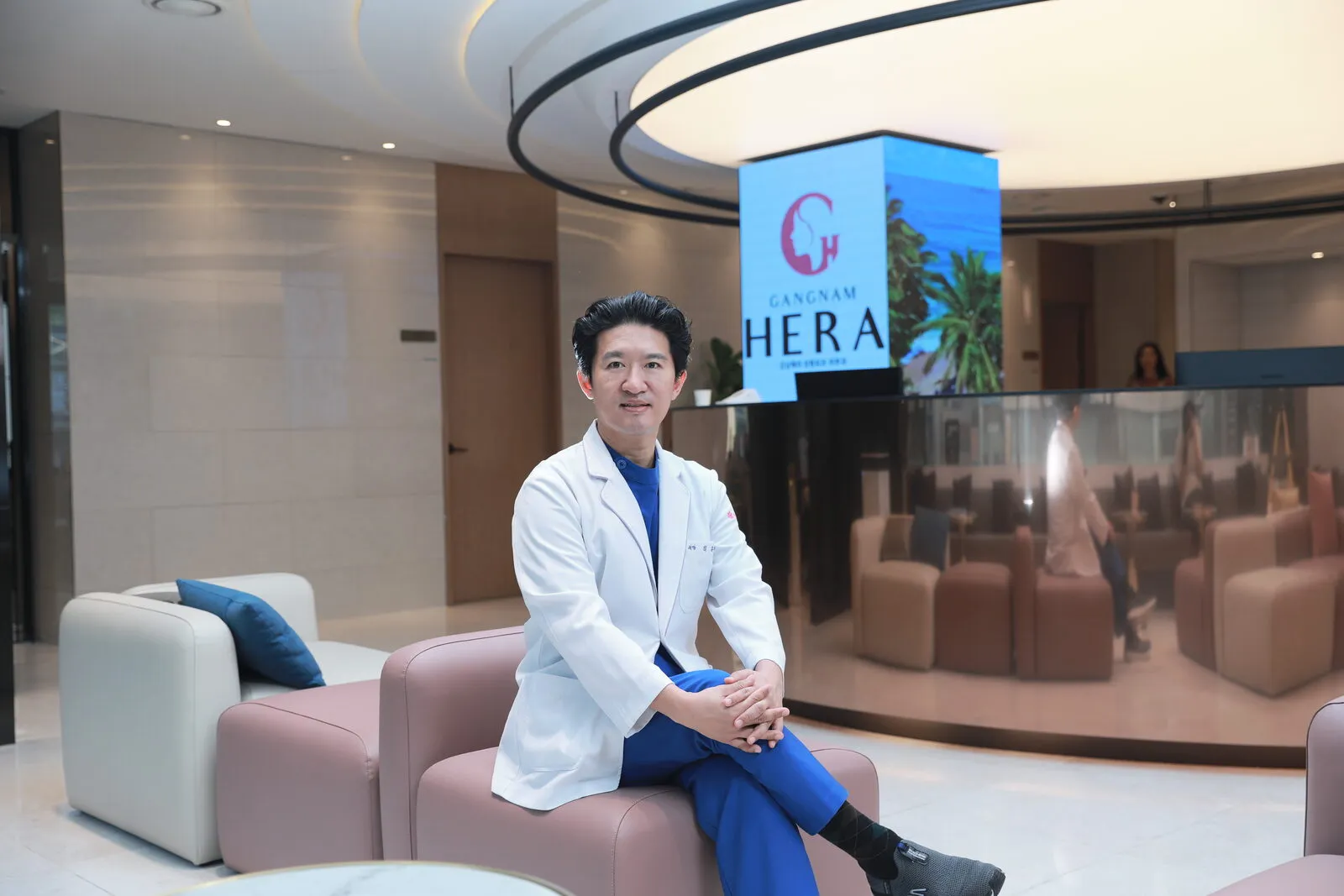 Skin boosters
How Long Does Rejuran Last? Months, Sessions and Trip Days
After a course of about three sessions spaced weeks apart, Rejuran's effect commonly holds for six months to a year. The bumps settle in one to three days, so session spacing shapes your trip more than downtime.
8 minRead →
มาหาเรา
ที่ตั้ง Gangnam HERA
ในเขตซอโช โซล เดิน 3 นาทีจากสถานีคังนัม ทางออก 9 แตะแผนที่เพื่อดูเส้นทาง
ที่อยู่
4F, 9 Seocho-daero 73-gil, Seocho-gu, Seoul, Republic of Korea
เวลาทำการ
วันอังคาร พุธ และพฤหัสบดี: 10:00 – 19:00 น.; วันจันทร์ ศุกร์: 10:00 – 20:00 น.; วันเสาร์: 10:00 – 17:00 น.; พักกลางวัน: 13:00 – 14:00 น.; ปิดวันอาทิตย์และวันหยุดนักขัตฤกษ์