Is a Korean Facial in Seoul a Spa Visit or a Clinic Visit?
 Dr. Jong Seon Kim · Director, Gangnam HERA8 min readLast updated
On this page
Not sure whether a Korean facial in Seoul means a spa or a doctor's clinic?
It's worth reading on before you book anything.
After this you'll know what the term covers, how a spa facial differs from a clinic skin booster, what affects the cost, how to check who is treating you, and how many days to allow before your flight home.
I'm Dr. Jong Seon Kim, Director of Gangnam HERA Plastic Surgery Clinic, where the fillers used are authentic, government-approved products. I wrote this because many travellers assume the two appointments are the same thing, and they are not. In short, a Korean facial is either a needle-free spa facial or a doctor-performed clinic treatment, and for a short trip the spa is often the simpler choice.
Book a consultation
Send us your question or a photo on WhatsApp and we will reply in English.
What does "Korean facial" actually mean in Seoul?
Usually one of three things: a multi-step spa facial, a device treatment such as microneedling, or an injected skin booster. Searches like "Korean glass skin facial" or "aqua peel facial" mix all three, which is why reviews of the same phrase can describe completely different experiences.
A spa facial works on the surface. It needs no recovery, and the fresh look usually lasts about as long as your next few skincare routines. A Korean head spa is a separate spa service focused on the scalp rather than the face.
The clinic version is a medical procedure. It uses needles or energy devices to reach the layer under the surface, so it brings a short recovery period, some risk and a consultation first. A Korean facial kit bought online sits at the far end: a sheet-mask and serum routine for home that shares the name and very little else.
Spa facial and clinic skin booster, side by side
The table below is the comparison most travelers are really making when they type "Korean facial".
| Spa facial | Clinic skin booster | |
|---|---|---|
| Who performs it | An esthetician | A doctor |
| Where it works | The outer surface of the skin | Injected into the skin, or delivered through microneedles |
| Needles | None | Fine needles or microneedles |
| How you look afterward | Fresh, maybe slightly pink | Often small bumps, redness or pinpoint marks for a few days |
| When the change shows | Same day | Gradually; some boosters are planned as a series |
| Sensible reason to book | An hour of cleansing and masks with no downtime | A specific concern such as dehydration, rough texture, pores or scars |
If what you want is an hour of being looked after and skin that looks fresh at dinner tonight, the left column is the right answer, and you don't need a doctor for it.
Which clinic treatments sit behind the "glass skin" look?
At HERA, the treatments people usually mean by a clinic "glow facial" are four skin boosters, each aimed at a different problem. None of them is a single formula for glass skin, and the degree of change in your skin varies from person to person.
- HILO WAVE Skin Booster is a hyaluronic-acid injection that replenishes moisture deep in the skin. It's the closest match to the dewy look people picture.
- Rejuran is a polynucleotide booster made from purified salmon DNA. It comes as Rejuran, Rejuran HB and Rejuran I, and targets elasticity, hydration and texture.
- Juvelook is a PDLLA booster that stimulates your own collagen. Its effect on texture, pores and firmness builds gradually rather than overnight.
- Potenza Exosome pairs Potenza RF microneedling with an exosome booster and is offered with the aim of improving pores, scars and redness. Evidence for exosome boosters is still limited: in 2019 the U.S. FDA stated that there are no FDA-approved exosome products, so it's reasonable to ask what exactly is being applied. If scarring is your main concern, our guide to acne scar treatment in Korea goes further.
Start with the problem that bothers you most in daylight. Skin that feels tight and looks flat by mid-afternoon points one way; uneven texture or old acne marks that serums haven't shifted point another. Some people who search for a Korean facial are really after shape, such as hollows or lost volume, and that is a filler question, covered on the general facial fillers page.
What decides the cost of a Korean facial in Seoul?
The biggest factor is which kind of appointment you mean. A spa facial is cleansing, masks and massage, while a clinic treatment places ingredients into the skin with a needle or microneedling device, so the two are priced on different things. Within a clinic treatment, the cost depends on the method, the ingredient and how much of it is used, the area treated, and how many sessions your skin needs.
Whether numbing cream is used, how many days you have in Seoul, and what follow-up you need can also change the plan. To get the figure for your own case, ask on WhatsApp and attach a daylight photo of your bare skin.
Who a clinic glow treatment suits, who it doesn't, and the risks
A clinic booster makes sense when you have a specific concern, can accept a few days of visible marks, and are comfortable with needles. If any of those is a no, a spa facial fits this trip better.
Some situations call for waiting. It also lists people who heal slowly or poorly, have a history of keloids, or have a weakened immune system as poor candidates.
On risks, the common ones are short-lived. The FDA lists bruising, redness, swelling, tenderness, itching and rash after filler injections, usually settling within days to weeks. After microneedling, the AAD describes redness, a sunburn-like feeling and swelling that typically fade within a few days to a week. Less common problems include lumps, infection and allergic reactions. The FDA describes accidental injection into a blood vessel as uncommon but serious for fillers; unusual pain, vision changes, or white, grey or blue skin near an injection site need medical care straight away.
Responses vary between people, and candidacy is decided at the in-person exam, not by a photo or a forum thread.
Book a consultation
Send us your question or a photo on WhatsApp and we will reply in English.
A first clinic visit in Gangnam, step by step
A clinic visit starts with a consultation, not a treatment bed. At HERA, consultations for English-speaking patients run with an English interpreter, so you can describe your concern in your own words and hear the doctor's reasoning without guessing.
In general, a consultation for a skin booster covers what bothers you, an in-person look at your skin under good light, your medications and skincare actives (retinoids and isotretinoin matter here), and which options fit, with their risks. Whether treatment can happen the same day depends on what the exam finds and on how many days you have left in Seoul.
Bring a list of your current medicines and the active ingredients in your skincare. Arrive without makeup if you can; it makes the skin easier to read.
How to check who is treating you and what goes into your skin
The FDA's advice for filler patients applies abroad too: choose a licensed provider trained in dermatology or plastic surgery, ask which product will be used and what its labeling says, and ask how a complication would be handled. It also warns against buying injectables online, since they may be counterfeit or unapproved.
At any clinic, Seoul included, these questions are reasonable to ask through an interpreter:
- Who will perform the treatment, and what is their specialty?
- What is the product's name, and can I see the sealed package before it's opened?
- What would you do if I had a reaction after I've flown home?
Asked at HERA, the first question has a short answer: the medical team is three plastic surgeons, Dr. Jong Seon Kim, Dr. Jong Hoon Lee and Dr. Jin Yi Han, and our backgrounds are on the doctor page of HERA's site so you can check them before you fly. Mine include Board Member, Korean Society of Aesthetic Surgery (KSAS) and Board Member, International Petit Medical Society. HERA is a Foreign Patient Attraction Medical Institution registered with Korea's Ministry of Health and Welfare.
How many days should a glow treatment get before your flight home?
Aim for at least three to seven days between a needle-based treatment and your flight, and never book it for the day before a long-haul flight. Marks usually fade within that window, and if something unexpected shows, you want to still be in Seoul where the treating doctor can see you.
- Same day: small bumps, redness or pinpoint marks are common. After microneedling, the American Academy of Dermatology advises waiting 24 hours before makeup.
- Around day 3: visible marks have often settled, though bruises from injections can take longer.
- Around day 7: most short-term redness and swelling has usually faded; collagen boosters keep working over the following weeks.
Before you fly
Avoid scheduling a needle treatment for your last full day in Seoul. Leave a buffer day in Seoul in case you need to be seen, and spend it sightseeing with sunscreen and a hat.
If your trip is three nights or fewer, a clinic consultation early in the trip and a spa facial on the last day fit the calendar with less strain.
Say you land in Seoul for a five-day trip, your skin looks dull and dry after a long flight, and you have never had an injection. I would start by asking how you feel about needles, because that alone can separate a spa booking from a clinic one. If you only want a cleansed, rested face for a few photos, a spa facial may be all you need.
If you want an injected ingredient, I would look at your skin in person first, and then plan the visit early in the trip so that any redness or small marks have time to settle before you fly home. The choice comes from your skin and your schedule, not from a fixed package.
Visiting HERA in Gangnam
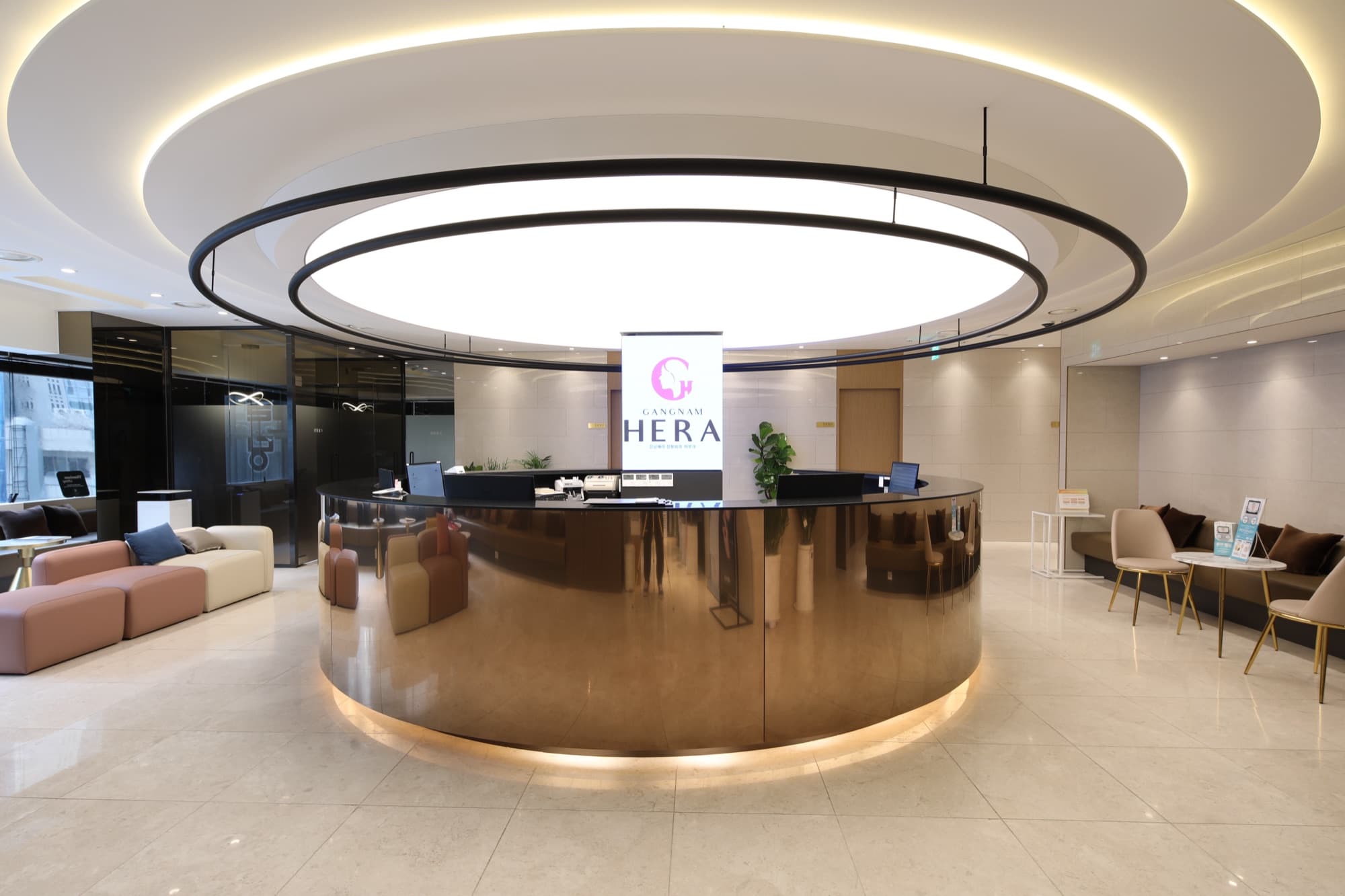
HERA is at 4F, 9 Seocho-daero 73-gil, Seocho-gu, Seoul, 3 minutes from Gangnam Station. Hours are Monday and Friday 10:00–20:00, Tuesday to Thursday 10:00–19:00, and Saturday 10:00–17:00.
Lunch break runs from 13:00 to 14:00, and we're closed on Sundays and public holidays, which matters if you land on a Saturday evening. Directions and doctor profiles are on HERA's English site.
Before you plan anything, send your travel dates, the one skin concern that bothers you most, and a daylight photo of your bare skin on WhatsApp.
FAQ
Frequently asked questions
Q1Is a Korean facial the same as a glass skin facial?
Not always. "Glass skin facial" is often used for spa facials and for clinic skin boosters alike. A spa version works on the surface with no needles, while a clinic version injects or microneedles ingredients into the skin. Ask which one a place is offering before you book.Q2Can I go sightseeing the same day as a clinic skin booster?
Usually yes, with sunscreen and a hat, but expect small bumps, redness or pinpoint marks for a few days. After microneedling, the American Academy of Dermatology advises waiting 24 hours before wearing makeup. Plan photos for later in the trip.Q3Does a clinic skin booster hurt?
Most people describe pricking or stinging during the injections or microneedling rather than strong pain. Sensitivity differs between people and between areas of the face. How discomfort is managed is discussed at the consultation.Q4Is a Korean head spa a type of facial?
No. A Korean head spa is a scalp and hair-care service offered by spas and salons.Q5Will a Korean facial kit at home give the same result as a clinic treatment?
No. Home kits are masks and serums that act on the surface of the skin. The American Academy of Dermatology notes that at-home and spa microneedling devices aren't meant to puncture the skin, so their results are typically less noticeable than a medical procedure.
真實經驗
患者怎麼說
由海外患者上傳的影片。



YouTube 上
出發前,先聽聽醫師怎麼說
我們的醫師在鏡頭前講解HERA的主力療程:拉提、玻尿酸與皮膚增強針,讓您在抵達首爾前,就知道會見到誰、他們怎麼思考。
韓語發音 · YouTube 提供自動翻譯字幕
- 6:24玻尿酸

 Dr. Jong · Dr. Jong
- 7:36診所與醫師Dr. Jong · Dr. Jong
- 8:07拉提Dr. Jong
- 5:44拉提Dr. Jong · Dr. Jong
Shorts
一個問題,不到一分鐘
HERA TV
The doctors explain it on camera — then in writing
Each piece is written by the doctor from their own YouTube video: the patient question, why it happens and how we approach it.
 6:24korean plla filler
Korean PLLA Filler? Filler vs Collagen Booster vs Skin Booster
Dr. Jong Seon Kim7 min read 4:21neck line filler
Neck Line Filler: One Treatment, Start to Follow-Up
 Dr. Jin Yi Han6 min read
 5:39korean skin booster
Korean Skin Booster: How to Choose by Your Skin's Main Problem
Dr. Jong Seon Kim7 min read
HERA Journal
Keep reading
 Skin boosters
How Long Does Rejuran Take? Chair Time, Bumps and Trip Days
A Rejuran visit usually takes half a day at most, and the small injection bumps typically flatten within one to three days. The full course takes longer: sessions are spaced two to four weeks apart.
8 minRead →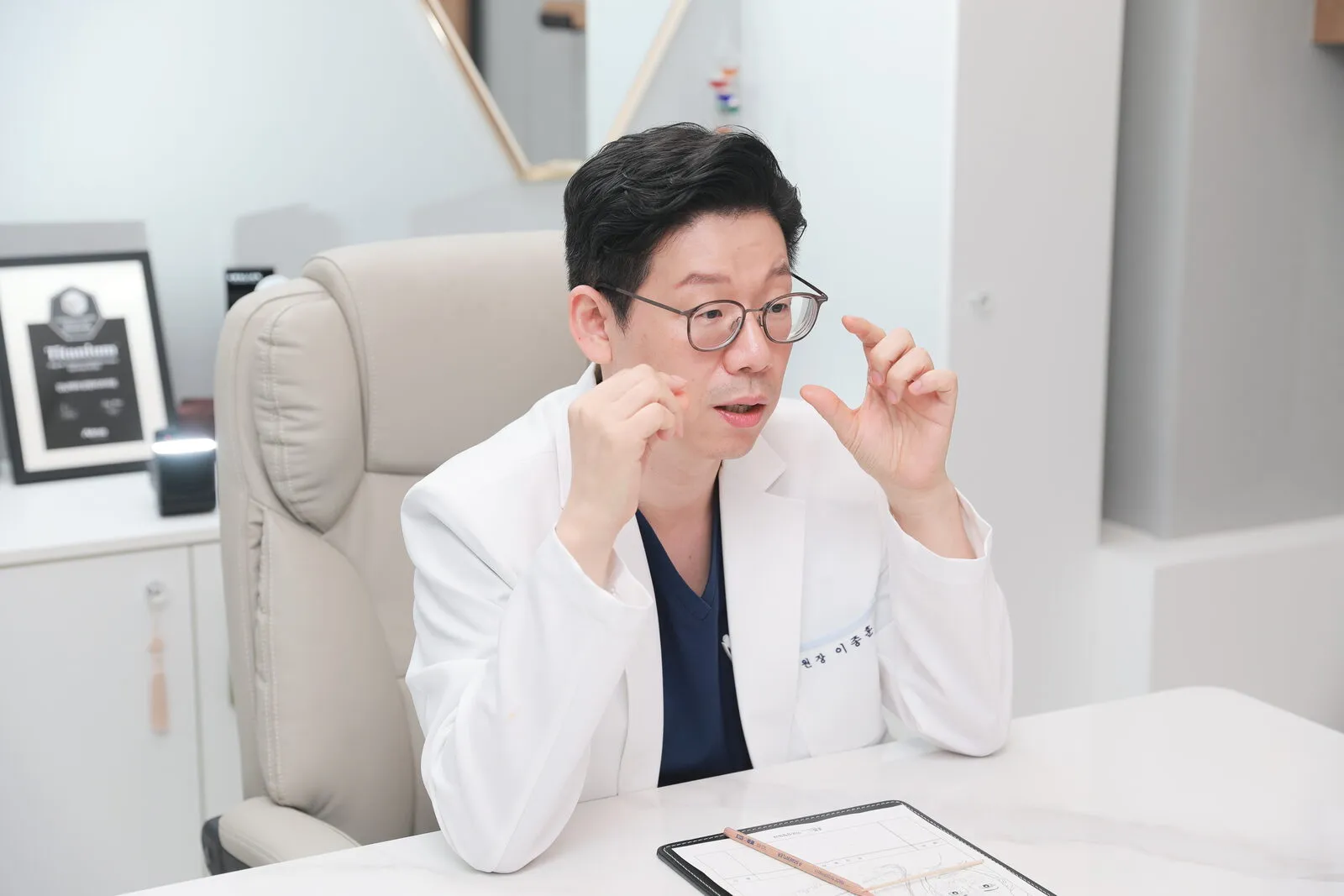 Skin boosters
When Does Rejuran Start to Show? Bumps, Weeks and Your Flight
Rejuran's injection bumps usually settle in a day or two and hydration often shows within weeks, while texture changes build over a course. Dr. Jong Seon Kim on which day of your Seoul stay to book it.
8 minRead →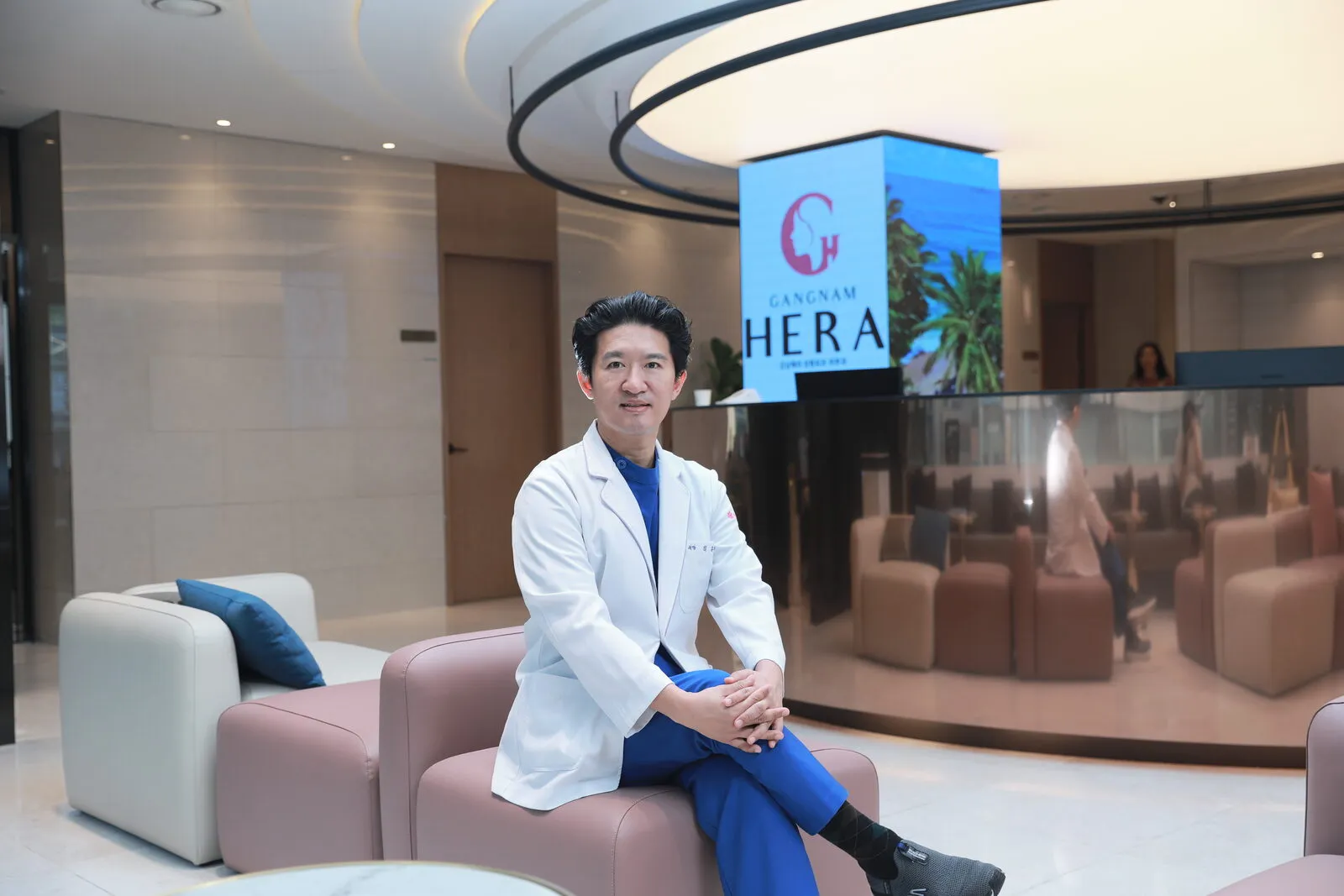 Skin boosters
How Long Does Rejuran Last? Months, Sessions and Trip Days
After a course of about three sessions spaced weeks apart, Rejuran's effect commonly holds for six months to a year. The bumps settle in one to three days, so session spacing shapes your trip more than downtime.
8 minRead →