Korean Rhinoplasty on a Short Trip: Surgery or Nose Filler?
 Dr. Jong Seon Kim · Director, Gangnam HERA7 min readLast updated
On this page
Korean surgical rhinoplasty typically raises the bridge with an implant or the patient's own cartilage and reshapes the tip, with a splint on the nose during early healing and visible swelling that eases over the first few weeks. HERA's treatment menu lists nose filler, not surgical rhinoplasty. If you want bone or cartilage reshaped, a breathing problem fixed or a wide nose narrowed, you need a surgical clinic.
If you want a higher bridge or a more defined tip on a short trip, with no operating room and no splint, nose filler may be an option. Which group you belong to depends on one thing: whether your nose needs something added or something taken away.
That distinction matters most if your trip is a long weekend or a two-week holiday rather than a month off work. A surgically reshaped nose keeps changing for months. A filler result is visible the same day, with trade-offs of its own.
What do people mean by “Korean rhinoplasty”?
Usually a nose that changes by a few millimeters rather than a dramatically different one: a smoother, slightly higher bridge, a tip with more definition, and a profile that stays in proportion with the eyes, lips and chin. Surgeons commonly build this with implants or cartilage. Some of the bridge and tip goals can be approached with filler instead.
Search results lump this together with double eyelid surgery because both are linked with Seoul, but a nose is a different decision. An eyelid crease is mostly about skin and fat. A nose involves bone, cartilage, skin thickness and the airway, and the same “Korean nose” photo can look very different on a face with a short midface or a strong chin.
Surgery or nose filler: which nose fits which?
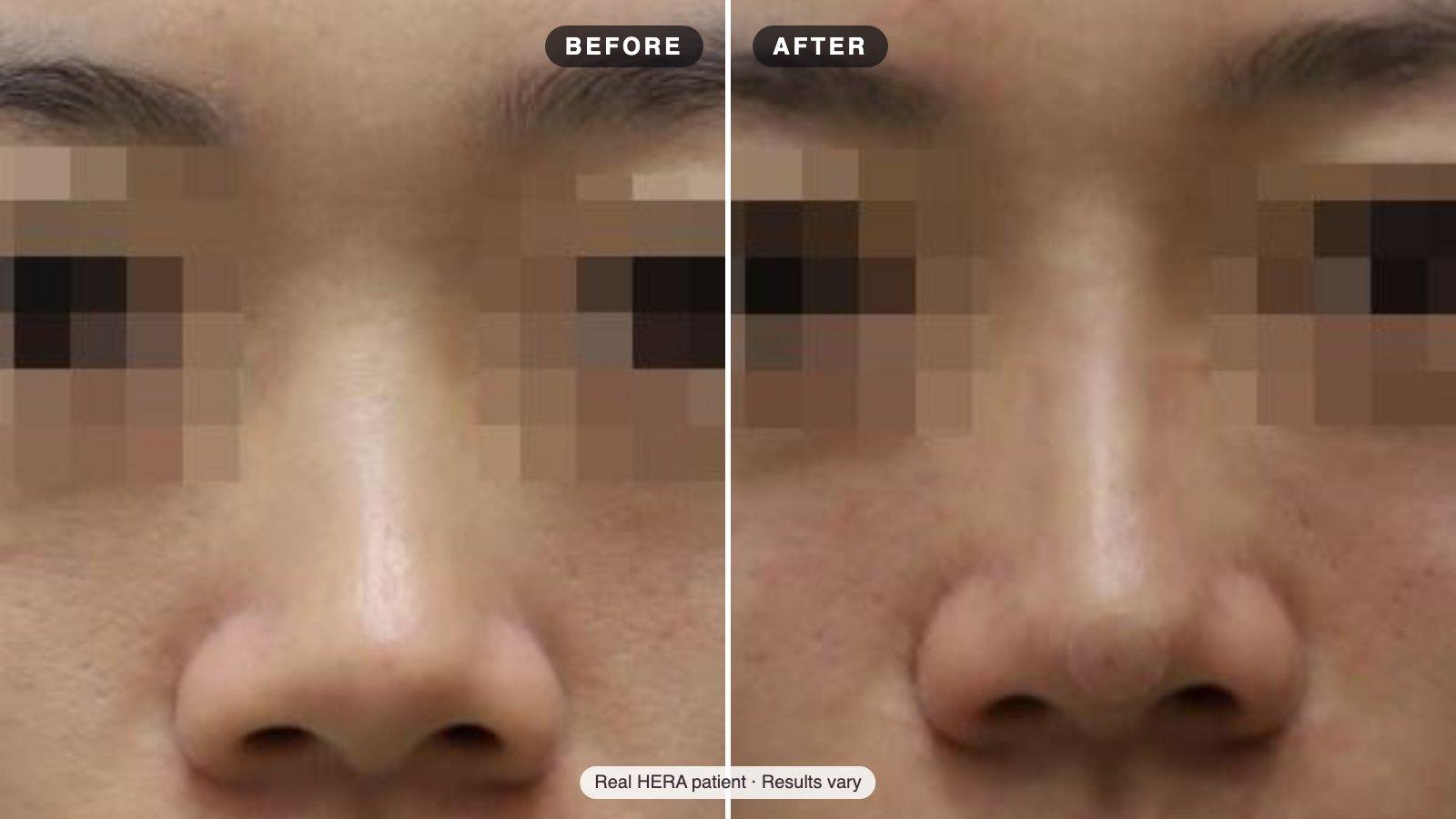
Filler adds volume; it cannot remove anything. A low bridge, or a tip that looks soft in profile, may suit filler. A hump, a wide bony base, a crooked septum or large nostrils need surgery, because the change requires removing or repositioning tissue.
| What you want changed | Nose filler | Surgical rhinoplasty |
|---|---|---|
| Raise a low bridge | Often possible | Possible |
| Small hump | Can only be blended by filling around it | Can be reduced |
| Narrow wide nostrils or a wide bony base | Not possible | Possible |
| Breathing problem, deviated septum | Not possible | Functional surgery can address it |
| Settling time | Swelling usually eases within days | Initial swelling eases over a few weeks; final shape can take up to a year |
| If you dislike the result | Hyaluronic acid filler can usually be dissolved with an enzyme | Change means revision surgery |
The surgical settling times come from the American Society of Plastic Surgeons, which notes that a splint supports the nose during early healing and that swelling may be worse in the mornings during the first year.
Three situations change the answer for travelers. If your profile is the only thing that bothers you and your bridge is low, filler is worth asking about first. If you're torn, some people use filler as a temporary trial of a higher bridge before deciding on surgery years later. If you've already had rhinoplasty, scar tissue and altered blood supply make filler in that nose a more cautious decision, and some operated noses shouldn't be injected at all.
When I look at a nose for filler, the measurements that matter are how far the bridge sits below the line I'd want in profile, how thick the skin over it is, and how the tip relates to the upper lip. Thin, tight skin over the bridge leaves little room, and adding more there raises pressure on the tissue.
Risks, and who shouldn't have nose filler
Filler is the wrong answer when the change needs removal, when the skin over the bridge is very thin or scarred, or when you aren't comfortable with the vascular risk. The nose has blood vessels close to the surface, and filler entering or pressing on one is the complication that matters most.
The U.S. Food and Drug Administration states that "the most concerning risk associated with the use of dermal fillers is unintentional injection into a blood vessel", with reported complications that include "necrosis (death of tissue), vision abnormalities including blindness, and stroke." Its list of uses the FDA has not approved includes injecting the nose. That applies to US labeling, and it is worth knowing before you decide, wherever you're treated.
A 2020 systematic review in Plastic and Reconstructive Surgery pooled published studies of nonsurgical rhinoplasty and cautioned that "complications may be underreported", so the true rate of serious vascular events is not well known.
The more common effects are milder: swelling, redness, tenderness and bruising for a few days, a small lump, or slight asymmetry. Over years, repeated layers of filler on the bridge can spread sideways and make the nose look wider rather than higher. Skin that turns white or dusky, pain out of proportion to the injection, or any change in vision needs medical attention immediately, not a wait-and-see message.
Book a consultation
Send us your question or a photo on WhatsApp and we will reply in English.
What happens at a nose filler consultation at HERA?
The visit starts with a consultation, with an English interpreter available, where a doctor typically examines your nose and asks what you want changed. Whether nose filler is used, and where, is decided in person after that examination, not from photos alone.
A few things are worth telling the doctor at that point, because they change the plan:
- any previous rhinoplasty, thread or filler in the nose, and roughly when
- medicines or supplements that make you bruise easily
- whether you wear heavy glasses that rest on the bridge
- your flight date, so treatment and a possible second look fit inside the trip
If a profile change is part of a wider plan, the chin often comes into the same conversation, since nose and chin projection are judged together. Our guide to chin filler in Korea covers that side of the profile, and the general facial fillers and lip filler pages describe the other filler areas that sit on the same profile line.
Who decides, and on what credentials
HERA has three board-certified plastic surgeons: Dr. Jong Seon Kim, Dr. Jong Hoon Lee and Dr. Jin Yi Han. The clinic is registered with Korea's Ministry of Health and Welfare as a Foreign Patient Attraction Medical Institution.
I'm a Board Member of the International Petit Medical Society. The full background is on the doctor profile page. This article was medically reviewed on October 8, 2026 by Dr. Jong Seon Kim.
How soon can you fly after nose filler?
Many people fly within a day or two of nose filler, but plan it so treatment is not the day before your flight. Keep a few days in Seoul afterwards so the doctor can see you again if swelling, a lump or a color change appears.
A rough first week, which varies from person to person:
- Treatment day: numbness wears off within hours; mild swelling and tenderness; avoid pressing or massaging the nose unless told to.
- Day 3: swelling has often settled enough to judge the shape; small bruises may still show.
- Day 7: the result is easier to read, and this is the day to raise any asymmetry.
Before you fly
avoid booking nose filler for the day before departure. If skin over the nose changes color or vision changes, seek care at once rather than waiting until you land.
Surgical rhinoplasty is a different calendar. With a splint, weeks of visible swelling and a shape that can take up to a year to settle, it suits a longer stay and a plan for follow-up once home.
The treatment itself. If you want the clinical detail — who it suits, how a session runs, recovery and the honest limits — it is set out on our Nose Filler page.
Visiting HERA in Gangnam
HERA is on the 4th floor of 9 Seocho-daero 73-gil, Seocho-gu, Seoul, about 3 minutes from Gangnam Station.
Hours are Monday and Friday 10:00–20:00, Tuesday to Thursday 10:00–19:00 and Saturday 10:00–17:00, with lunch from 13:00 to 14:00; the clinic is closed on Sundays and public holidays. More about the clinic is on our Gangnam HERA home page.
If you're still deciding between a surgeon and filler, send your travel dates and a side-profile photo of your nose in daylight on WhatsApp to arrange an English-interpreted consultation. Whether filler fits your nose is decided in person at that exam.
FAQ
Frequently asked questions
Q1Does HERA perform surgical rhinoplasty?
HERA's treatment menu lists nose filler and other injectable and lifting treatments, not surgical rhinoplasty. If your goal needs bone or cartilage changed, a surgical clinic is the right place to ask.Q2Is nose filler the same as a non-surgical nose job?
Yes, “non-surgical rhinoplasty” usually means nose filler. It can raise a low bridge or add definition to the tip, but it cannot make a nose smaller, narrower or easier to breathe through.Q3Can nose filler be dissolved if I don't like it?
Hyaluronic acid fillers can usually be broken down with an enzyme called hyaluronidase. Ask which type of filler is planned before treatment, since not every filler can be dissolved.Q4Can I get nose filler after a previous nose job?
Sometimes, but with more caution. Scar tissue and a changed blood supply raise the stakes, so the doctor needs to know exactly what was done and when, and some operated noses are better left alone.Q5Do I need to speak Korean for the consultation?
No. HERA offers consultations with an English interpreter, so you can describe what you want changed and ask about risks in English.
เรื่องจริงจากผู้ป่วย
เสียงจากผู้ป่วยของเรา
วิดีโอที่ผู้ป่วยจากต่างประเทศโพสต์ไว้



บน YouTube
ฟังจากแพทย์ก่อนเดินทาง
แพทย์ของเราอธิบายทรีตเมนต์หลักของ HERA ได้แก่ ยกกระชับ ฟิลเลอร์ และสกินบูสเตอร์ ผ่านวิดีโอ เพื่อให้คุณรู้ว่าจะได้พบใครและแพทย์คิดอย่างไร ก่อนที่คุณจะเดินทางถึงโซล
เสียงภาษาเกาหลี · มีคำบรรยายแปลอัตโนมัติบน YouTube
- 6:24ฟิลเลอร์

 Dr. Jong · Dr. Jong
- 7:36คลินิกและแพทย์Dr. Jong · Dr. Jong
- 8:07ยกกระชับDr. Jong
- 5:44ยกกระชับDr. Jong · Dr. Jong
Shorts
คำถามเดียว ไม่ถึงหนึ่งนาที
HERA TV
The doctors explain it on camera — then in writing
Each piece is written by the doctor from their own YouTube video: the patient question, why it happens and how we approach it.
 6:56unlicensed filler injections
Unlicensed Filler Injections: The Real Risks, From Two Doctors
Dr. Jong Seon Kim7 min read 6:05wrinkles around mouth treatment
Wrinkles Around the Mouth: A CaHA, Ultherapy and RF Combination
Dr. Jong Hoon Lee7 min read 5:40elf ear filler
Elf Ear Filler: Shaping Flat Ears for a Smaller-Looking Face
Dr. Jong Seon Kim6 min read
HERA Journal
Keep reading
 Fillers
Non-Surgical Nose Lift: Three Clear Days Before You Fly
Nose filler swelling usually eases within two to three days and looks settled by about a week; threads take closer to a week. Treat at least three clear days before your flight, early in the trip.
9 minRead → Fillers
How Long Dermal Filler Lasts: Lips Go First, Under-Eyes Last
Hyaluronic acid filler usually lasts six months to a year. Lips sit at the short end, the nose bridge and under-eyes at the long end, and most swelling settles within a week of treatment.
8 minRead → Fillers
Which Dermal Filler Lasts the Longest? Longer Isn't Safer
Non-absorbable PMMA lasts the longest, then poly-L-lactic acid, then hyaluronic acid. For lips, nose and under-eyes I still choose hyaluronic acid, because it is the one common type that can be dissolved.
9 minRead →
มาหาเรา
ที่ตั้ง Gangnam HERA
ในเขตซอโช โซล เดิน 3 นาทีจากสถานีคังนัม ทางออก 9 แตะแผนที่เพื่อดูเส้นทาง
ที่อยู่
4F, 9 Seocho-daero 73-gil, Seocho-gu, Seoul, Republic of Korea
เวลาทำการ
วันอังคาร พุธ และพฤหัสบดี: 10:00 – 19:00 น.; วันจันทร์ ศุกร์: 10:00 – 20:00 น.; วันเสาร์: 10:00 – 17:00 น.; พักกลางวัน: 13:00 – 14:00 น.; ปิดวันอาทิตย์และวันหยุดนักขัตฤกษ์