Korean PDRN Pink Collagen: Why a Cream Can't Reach Where an Injection Does
 Dr. Jong Seon Kim · Director, Gangnam HERA9 min read
On this page
Bought a jar of Korean PDRN pink collagen and now wondering whether it's doing anything for your dry, thinning skin, or whether the injection is what you actually need?
Read this before you stock up in Seoul or book a clinic appointment.
You'll know what the reviews get right and wrong, what decides the cost of an injected booster, and which method fits your skin, so you can choose between a cream and a needle with your budget in mind.
Hello, I'm Dr. Jong Seon Kim, Director of Gangnam HERA Plastic Surgery Clinic and a board member of the International Petit Medical Society.
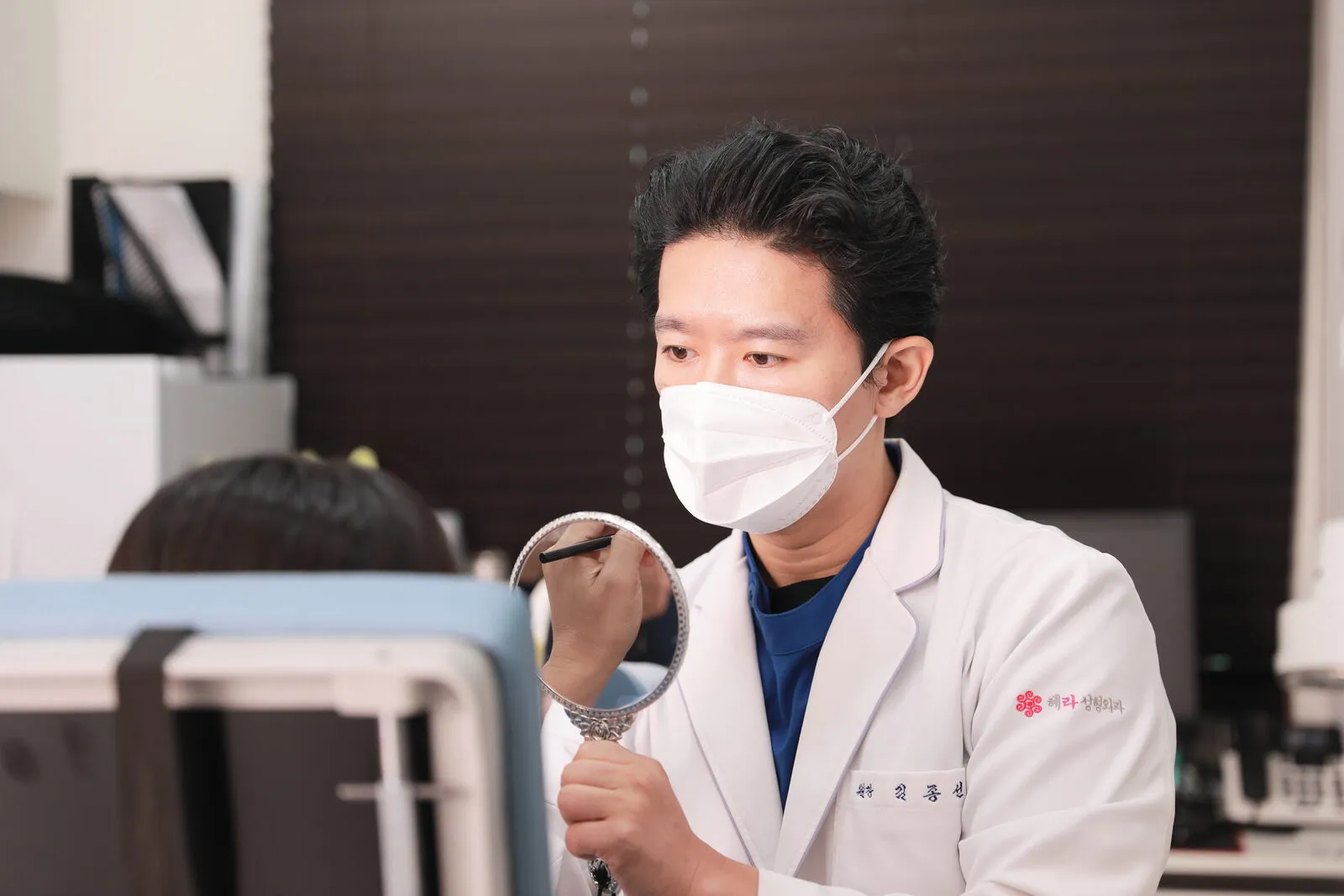
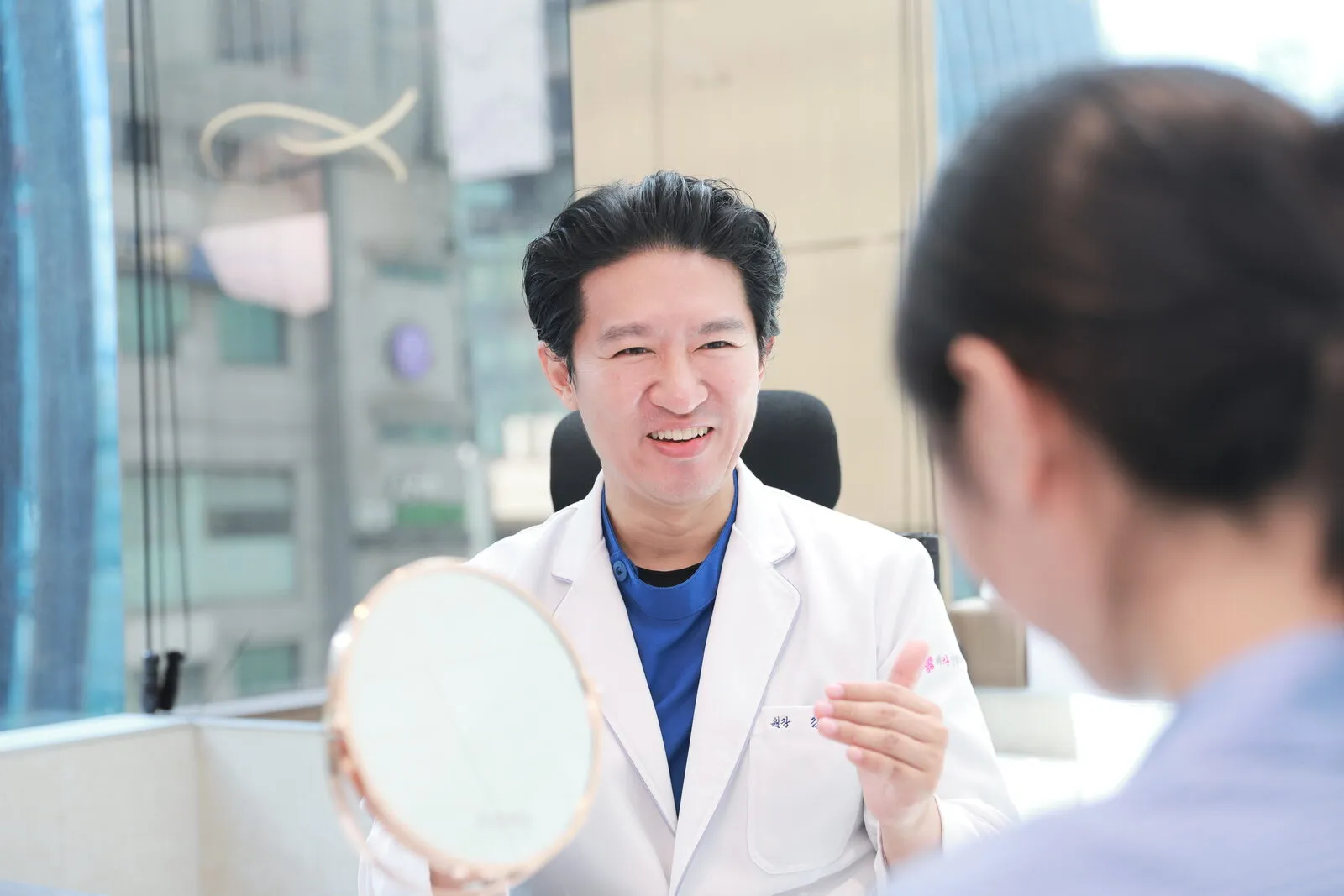
At HERA, the specialist who consults with you is the one who performs your treatment. Korean and international patients pay the same price, you receive a written estimate before treatment, and consultations can be held with an English interpreter.
I'm writing this because many people treat a PDRN cream and a salmon DNA injection as one treatment in two strengths, and end up paying for the wrong one.
Pink PDRN collagen products are skincare. They can leave dry skin softer and less tight, but their molecules are too large to reach the layer where collagen is made, which is where an injected polynucleotide booster such as Rejuran is placed.
If you can't tell which of the two your skin needs, send a daylight photo of your face and a picture of the product you use now on WhatsApp, with the one question that's bothering you most. Daylight shows dryness and fine lines more accurately than any description, so you're asking about your own skin rather than skin in general.
Book a consultation
Send us your question or a photo on WhatsApp and we will reply in English.
What is Korean PDRN pink collagen, and what does it do for dry skin?
PDRN stands for polydeoxyribonucleotide: fragments of DNA, usually purified from salmon. In medicine it has been studied as a way to help slow-healing wounds repair, and a review in Pharmaceuticals describes it as a promising platform for impaired wound healing. Skincare brands borrowed the name from that research.
The pink collagen products pair PDRN with collagen in a pink formula, sold as serums, jelly masks and creams. The colour is a design choice. It says nothing about how much PDRN is inside or where it goes once it's on your face.
On the skin, these products work as moisturizers. Collagen and other large molecules hold water and leave a thin film, which is why your face can feel smoother an hour after a mask. If Korean PDRN pink collagen makes your skin feel less tight by evening, that effect is real. It's surface hydration, and it fades when you stop.
People hunting for the one PDRN product in Korea for dry skin are usually asking the wrong question. For dryness, the whole routine matters more than one ingredient: a cleanser that doesn't strip, a moisturizer you'll use twice a day, and sunscreen every morning. A PDRN product can sit in that routine. It can't replace it.
Why a cream can't reach where an injection works
Skin is built to keep things out. Dermatologists Bos and Meinardi described what's known as the 500 Dalton rule: compounds much heavier than about 500 Daltons pass through the outer layer of healthy skin poorly. DNA fragments and collagen are far heavier than that. They stay near the surface, where they hydrate, and don't arrive in the dermis, where fibroblasts make new collagen.
An injected booster skips that barrier. Rejuran is a polynucleotide (PN) booster, also made from purified salmon DNA, and it's placed into the dermis with a fine needle. A comparison paper in Pharmaceutics explains that PN is made of longer, heavier chains than PDRN, which gives it a gel-like body in the skin, while PDRN is the shorter fragment more often used for tissue repair. Same family, different tools.
| Pink PDRN collagen products | Injected PN booster (Rejuran) | |
|---|---|---|
| Where it acts | Skin surface | Dermis, under the surface |
| Who applies it | You, at home | A doctor, in clinic |
| What you can expect | Softer, better-hydrated feel while you use it | Gradual change in texture and hydration over a course |
A systematic review of polynucleotides in aesthetic medicine reported improvements in texture, hydration and fine lines, with mostly mild, short-lived side effects. Many of the studies were small, so I see the injection as a reasonable option for the right skin, and not something everyone needs.
What do PDRN reviews get right, and what do they get wrong?
Review threads about Korean PDRN products tend to repeat the same few claims. Some hold up; some don't.
'My skin looked plumper the next morning.' Plausible. That's hydration, and it's temporary.
'It's the clinic injection in a bottle.' No. A cosmetic on the surface and a PN gel in the dermis act in different places, as described above.
'Pharmacy PDRN is stronger than the shop version.' A product sold over the counter in Korea is still applied to the skin, so the same barrier applies to it.
'It faded my dark spots.' A moisturizer can make tone look more even for a day. Sunspots and melasma have their own treatments, which I go through in the hyperpigmentation treatment guide for Korea.
Reviews of the injection itself often mention small bumps for a day or so afterwards. That one is true: PN gel sits as tiny raised points at each injection site and usually flattens quickly. Result photos online deserve the same caution as review text, and I explain how to judge laser result photos in another post: lighting, angle and timing first.
Which methods suit you, and when is a booster not worth it?
In short, this is how I'd sort it, as general guidance.
Stay with skincare if your main problem is tightness, flaking or a dull surface that improves when you moisturize well. An injection won't make up for a routine that isn't there yet.
Consider an injected PN booster if your skin has become thin, crepey or finely lined, especially under the eyes or on the cheeks, and good skincare hasn't changed it. Our menu includes Rejuran, Rejuran HB and Rejuran I; which one, and where, is decided face to face.
Consider a collagen stimulator if what bothers you is softness and loss of firmness more than texture. Juvelook, a PDLLA booster, works differently from PN, and I've covered it in the Juvelook skin booster guide.
A booster isn't the answer for deep folds, sagging jowls or brown spots. Those belong to fillers, lifting, or lasers such as the ones in our pico laser guide.
Say you're 56, your skin feels tight by mid-afternoon even with a rich cream, the skin under your eyes has gone crepey, and you have six days in Seoul. I'd keep your cream, because the tightness is a hydration problem it already helps with. The crepey under-eye texture is the part a PN booster could address, so I'd look at a single session early in your stay rather than on your last day. If your photo instead showed mostly sunspots, I'd point you to a pigment treatment and leave boosters out of it.
What decides the cost of a PN booster in Seoul?
There's no single figure for everyone, but the factors are few and easy to check:
- The product: Rejuran, Rejuran HB, Rejuran I and Juvelook are different products.
- The area: full face, under-eyes only, or face and neck.
- The number of sessions: published PN protocols usually run as a series spaced a few weeks apart, and one trip may only fit one session.
- What it's combined with: pairing a booster with a treatment such as Potenza Exosome changes the plan.
Two things don't change. Korean and international patients pay the same price, and you get a written estimate before treatment. An injectable estimate is put together in a similar way across treatments, and I've laid that out line by line in the forehead filler cost guide. For your own case, ask on WhatsApp what it would cost, naming the area you'd want treated.
Doctor-led and sealed: what you should see on the day
At HERA, the specialist who consults with you is the one who performs your treatment; it isn't handed off. We use only genuine, approved products, and the sealed vial is opened in front of you. Ask to see the product name on the package before it's opened. You're entitled to know exactly what goes into your skin, wherever you're treated.
We don't rush through high volumes, and every treatment begins with a 1:1 consultation. Dr. Jin Yi Han plans from a scan of more than 40 skin indicators, so you can compare the same numbers at a later visit. Our directors keep attending academic conferences in Korea and abroad to keep the work evidence-based, and you can read each doctor's background on Gangnam HERA's English site.
Recovery after a PN booster: same day, day 3, day 7
Same day: expect small raised bumps at each injection point, some redness, and possibly pinpoint bleeding. The bumps usually settle within a day or so.
Day 3: most bumps have flattened. A small bruise or two can still show, particularly under the eyes.
Day 7: bruises are usually fading, and most people go about their trip as normal. Any change in texture builds gradually over the following weeks, and how much it changes differs from person to person.
Before you fly
Avoid booking the injection for the day before your flight home. Give bumps and any bruising at least a couple of days to settle while you're still in Seoul.
Risks and side effects to know
Common and temporary: redness, swelling, small bumps, tenderness and bruising at the injection sites, usually lasting from a day to about a week.
Who should wait or skip it, as general medical guidance: anyone allergic to fish or salmon-derived ingredients, since PN comes from salmon DNA; anyone with an infection, cold sores or active inflammation in the area; anyone who has just had a laser or peel there; people taking isotretinoin; and anyone pregnant or breastfeeding. Mention blood thinners too, because they make bruising more likely.
After you're home: increasing pain, warmth, spreading redness, pus or fever are reasons to see a local doctor promptly rather than wait. The CDC's medical tourism guidance suggests bringing copies of your treatment records home so a doctor there can see what was done. You can also message us on WhatsApp with a photo.
Once you have dates, send them on WhatsApp together with the day you fly home, and ask whether one session fits that window. Your flight day is what decides whether day 3 lands in Seoul or on the plane.
Book a consultation
Send us your question or a photo on WhatsApp and we will reply in English.
Visiting HERA in Gangnam
We're on the 4th floor of 9 Seocho-daero 73-gil, Seocho-gu, three minutes from Gangnam Station. Hours are 10:00–20:00 on Mondays and Fridays, 10:00–19:00 Tuesday to Thursday, and 10:00–17:00 on Saturdays, with a lunch break from 13:00 to 14:00. We're closed on Sundays and public holidays, so plan a booster for a weekday or Saturday early in your trip. HERA is registered with Korea's Ministry of Health and Welfare as a foreign patient attraction medical institution.
Your first message on WhatsApp can be short: one daylight photo and the question 'Is my dryness a skincare problem or a booster problem?' is enough, and you can ask before booking anything. When you come in, the doctor who consults with you examines your skin and recommends only what it needs, and you'll have the written estimate before anything starts.
FAQ
Frequently asked questions
Q1Can I keep using my pink PDRN collagen serum after a Rejuran session?
Usually yes, once the injection points have closed, which for many people is the next day. For the first few days, apply skincare without rubbing and hold off on strong actives such as retinoids or exfoliating acids on the treated area.Q2Does a fish allergy matter for PN boosters?
It can. PN boosters such as Rejuran are made from purified salmon DNA, so an allergy to fish or salmon-derived ingredients is a reason to skip it. Tell the doctor about any allergy before treatment.Q3Can I buy injectable PDRN or PN in Korea and use it at home?
Please don't. Injectable boosters are medical products meant to be placed by a doctor under clean conditions. Injecting at home, or pushing serums in with home needling devices, raises the risk of infection, lumps and scarring.Q4How many booster sessions would I need?
Published PN protocols usually use a series of sessions spaced a few weeks apart. On a single trip, most travelers fit one session, so it helps to think about whether you'll be back in Seoul, and ask about spacing when you plan.Q5Do international patients pay more at HERA?
No. Korean and international patients pay the same price, and you receive a written estimate before treatment.
真實經驗
患者怎麼說
由海外患者上傳的影片。




YouTube 上
出發前,先聽聽醫師怎麼說
我們的醫師在鏡頭前講解HERA的主力療程:拉提、玻尿酸與皮膚增強針,讓您在抵達首爾前,就知道會見到誰、他們怎麼思考。
韓語發音 · YouTube 提供自動翻譯字幕
- 6:24玻尿酸

 Dr. Jong · Dr. Jong
- 7:36診所與醫師Dr. Jong · Dr. Jong
- 8:07拉提Dr. Jong
- 5:44拉提Dr. Jong · Dr. Jong
Shorts
一個問題,不到一分鐘
HERA TV
The doctors explain it on camera — then in writing
Each piece is written by the doctor from their own YouTube video: the patient question, why it happens and how we approach it.
 6:24korean plla filler
Korean PLLA Filler? Filler vs Collagen Booster vs Skin Booster
Dr. Jong Seon Kim7 min read 4:21neck line filler
Neck Line Filler: One Treatment, Start to Follow-Up
 Dr. Jin Yi Han6 min read
 5:39korean skin booster
Korean Skin Booster: How to Choose by Your Skin's Main Problem
Dr. Jong Seon Kim7 min read
HERA Journal
Keep reading
 Skin boosters
How Long Does Rejuran Take? Chair Time, Bumps and Trip Days
A Rejuran visit usually takes half a day at most, and the small injection bumps typically flatten within one to three days. The full course takes longer: sessions are spaced two to four weeks apart.
8 minRead → Skin boosters
When Does Rejuran Start to Show? Bumps, Weeks and Your Flight
Rejuran's injection bumps usually settle in a day or two and hydration often shows within weeks, while texture changes build over a course. Dr. Jong Seon Kim on which day of your Seoul stay to book it.
8 minRead → Skin boosters
How Long Does Rejuran Last? Months, Sessions and Trip Days
After a course of about three sessions spaced weeks apart, Rejuran's effect commonly holds for six months to a year. The bumps settle in one to three days, so session spacing shapes your trip more than downtime.
8 minRead →