Thermage vs Ultherapy vs Density in Korea: Pick by Depth
 Dr. Jong Seon Kim · Director, Gangnam HERA9 min read
On this page
Reading 2025 comparisons of Thermage, Ultherapy and Density in Korea, and still not sure which one your face needs before a single short trip to Seoul?
They heat different layers. Thermage and Density are monopolar radiofrequency devices that tighten the skin itself; Ultherapy focuses ultrasound deeper, down to the fibrous layer that holds up the cheeks and jawline. Crepey, thinning skin leans toward radiofrequency, an early soft jawline leans toward ultrasound, and plenty of faces need a little of both.
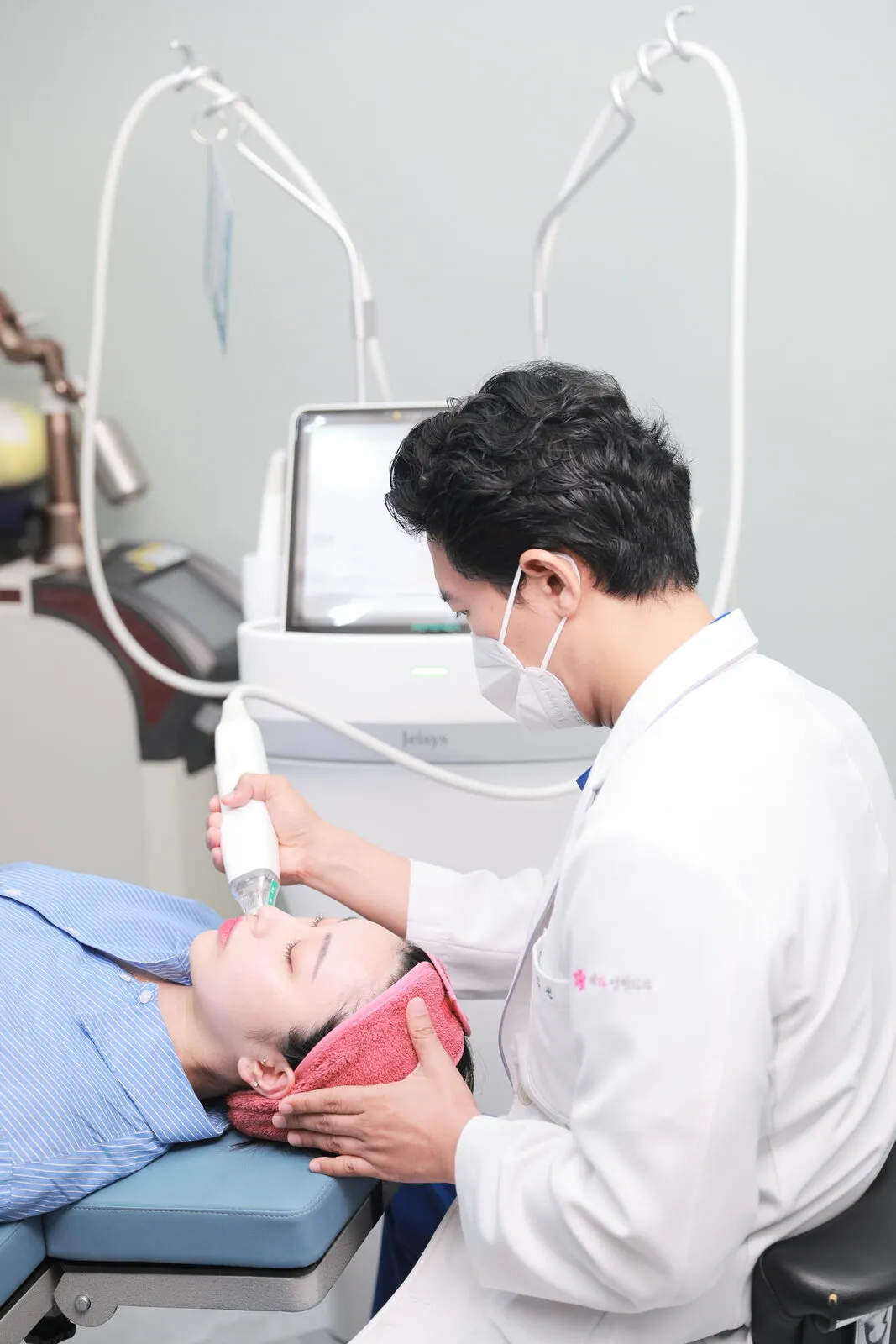
Hello, I'm Dr. Jong Seon Kim, Director of Gangnam HERA Plastic Surgery Clinic in Seoul.
I'm a board member of the Korean Society of Aesthetic Surgery and of the International Petit Medical Society, and I look at the whole face before planning anything, then explain what will change and what won't. At HERA the doctor who consults with you is the one who treats you. We're registered with Korea's Ministry of Health and Welfare to treat foreign patients, foreigners pay the same price as Korean patients, and a medical interpreter for your language is provided at no extra charge.
If you can't tell whether your problem is loose skin or dropped tissue, send a front and a side photo of your face, taken in daylight, on WhatsApp with your travel dates, and ask which of the three would match what the photo shows.
Book a consultation
Send us your question or a photo on WhatsApp and we will reply in English.
Which layer does each device heat?
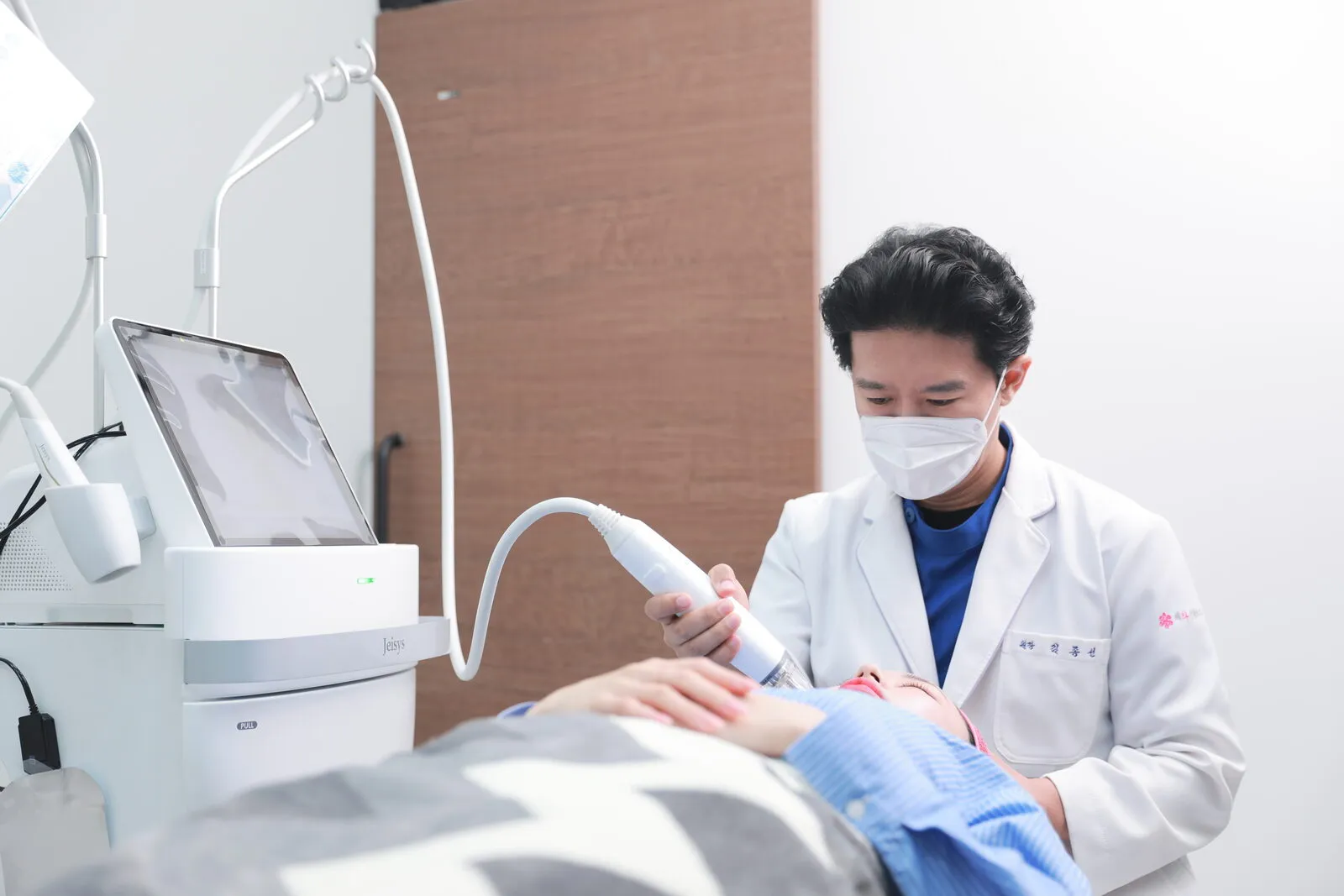
Ultherapy (the device itself is called Ulthera) places tiny points of focused ultrasound heat at fixed depths under the skin. The 4.5 mm and 3.0 mm transducers are mainly for lifting; 4.5 mm reaches the SMAS, the layer of muscle and fascia a surgeon tightens during a facelift. A narrow 1.5 mm tip stays shallow, for skin near the eyes and mouth. The handpiece shows an ultrasound image, so the doctor can see which layer is being treated.
Thermage spreads radiofrequency heat evenly through a broader volume of the dermis and the fibrous bands just under it, through a cooled, single-use tip. Density is a Korean-made monopolar radiofrequency device built on the same principle; the differences sit in the handpiece and in how energy and cooling are delivered. Density is not on our menu at HERA. Thermage and Ulthera are, alone or together in the Premium Lift Combo, which pairs them with Titanium; the full treatment list is on HERA's English homepage.
Picture a sofa cushion. Radiofrequency shrinks the fabric cover; focused ultrasound re-tensions the springs about 4.5 mm down. A tighter cover won't lift a sagging seat, and new springs won't smooth a crumpled cover.
| Thermage / Density | Ultherapy | |
|---|---|---|
| Energy | Monopolar radiofrequency | Microfocused ultrasound |
| Main target | Dermis and the bands just beneath it | Deep dermis down to the SMAS (up to 4.5 mm) |
| Suits | Crepey, thinning skin; fine laxity around the eyes and neck | Early jowls, a softening jawline, heavy brows |
| How it feels | Pulses of deep heat alternating with cooling | Short stings with a dull ache, stronger over bone |
| When it shows | Some tightening that day; most builds over several months | Noticeable from about a month, building for months |
I've gone further into the first two head to head in Thermage vs Ultherapy: which one in Korea, and into the deep layer itself in SMAS lifting with Ultherapy.
Who should choose radiofrequency, who ultrasound, and who neither?
Radiofrequency suits skin that has lost firmness without much drop: fine crinkling on the cheeks when you smile, crepey eyelids, a neck that looks crumpled more than loose. Because the heat is spread through a broad, shallower volume, it is also the more cautious choice on a slim face where there's little fat to spare.
Ultrasound suits tissue that has started to move: the first jowl, a jawline that no longer looks sharp in side photos, brows sitting lower than they did. It needs some soft tissue to work on; over a very thin, bony face the deep points have less to lift.
Neither suits everything. If skin hangs in folds, an energy device makes a modest change at most, and threads or a surgical consultation are the conversation to have. If the problem is lost volume, such as hollow temples or flat cheeks, heat adds nothing; that is a filler question.
Say you're 44, living in Vancouver, with five nights in Seoul. Your jawline has softened over the last two years, and the skin over your cheeks looks thin and lined when you smile. I'd reason it this way: ultrasound along the jaw, where tissue has dropped; radiofrequency over the cheeks, where the issue is the skin itself; and a lighter hand over the hollow under the cheekbone, because deep heat there is where volume loss tends to get blamed. If your face were fuller, ultrasound alone might cover it.
Can Thermage or Ultherapy make a face look hollow?
Forum threads about these devices repeat a handful of claims. Some hold up medically and some don't.
“It melted my fat.” Reports of fat loss or a hollower contour after radiofrequency or focused ultrasound do exist. They're uncommon, and they tend to involve high energy over areas that were already thin, such as the temples or under the cheekbones. That makes it a reason to plan energy area by area, not a typical outcome.
“You see it the same day.” Partly true. Collagen contracts with heat, so some tightening can show early, but the change that lasts builds over the following months as new collagen forms.
Risks and side effects to know
“More shots means more lift.” No. Once the tissue has had the energy it can respond to, extra passes mainly add the risk of burns and tenderness.
“One session lasts for years.” Aging keeps going. Many doctors suggest a reassessment about a year later, and the face you have then decides whether to repeat.
Burns, numbness and volume loss: what to watch for
The usual effects are short-lived. After radiofrequency, redness and mild swelling generally settle within hours to a day. After focused ultrasound, the treated area can stay red and swollen into the next day, and the jawline may feel tender to touch or when chewing for days to a few weeks; small bruises or welts sometimes appear. A 2023 systematic review of focused ultrasound for facial tightening found the side effects were mostly mild and passed on their own.
Less common are small burns or blisters, temporary numbness or tingling along a nerve after ultrasound, which usually fades over weeks, and the contour change described above. How skin reacts varies from person to person, which is why energy should be set area by area.
As general medicine, these are reasons to wait or skip:
Infection and scars: what to watch for
- pregnancy or breastfeeding
- a pacemaker or other implanted electronic device (a reason to avoid monopolar radiofrequency)
- active infection, cold sores or an acne flare in the area
- isotretinoin in the past several months, or a tendency to keloid scars
- filler or threads placed recently in the same area (tell the doctor where and when)
Numbness and irritation: what to watch for
If something shows up once you're home, photograph it with the date. Don't pop a blister; keep it clean and covered and have a local doctor look at it. Numbness that improves week by week is usually nerve irritation settling; numbness that spreads, or skin that darkens or breaks down, needs a doctor that week. Keep a note of the device, the areas and the date so the doctor at home knows what was done. There's more on the ultrasound side in Ultherapy side effects.
Before you pick a date, make a short list of any implants, recent filler or threads, and current medications, and send it on WhatsApp with one daylight photo. Ask whether anything on that list rules out one of the devices for you.
Book a consultation
Send us your question or a photo on WhatsApp and we will reply in English.
What decides the cost of Thermage, Ultherapy or both?
- Device: Thermage, Ultherapy, or the Premium Lift Combo that adds Titanium.
- Areas: full face, eyes, jawline or neck; each adds treatment time and energy.
- Energy: how much your tissue needs, set by the doctor after the exam.
- Numbing and add-ons agreed on the day.
- Timing: one session on this trip, or a plan that includes a return visit later.
At HERA foreigners pay the same price as Korean patients, and you get a written estimate before treatment, so the device and the areas are on paper before anything starts. You'll find more on what goes into each price in Thermage cost in Korea and in the Ultherapy cost and results guide. For your own case, send a photo on WhatsApp with the areas that bother you and ask what it would cost; deposit and payment method are settled after the consultation, so put both questions in the same message.
Questions to ask any clinic before treatment
Wherever you book, these answers tell you more than the logo on the machine:
- Is the doctor who examines me the one who treats me?
- Is the tip or transducer genuine, and can I see it before we start?
- Does the written estimate name the areas and the energy or shot amount?
- How is energy adjusted over thin areas like the temples?
- Will an interpreter be with me for the consultation?
- Who do I contact if a blister appears after I'm home?
It doesn't have to be HERA, but you should hear clear answers to all six before you lie down. Here, the specialist who consults with you performs your treatment, only genuine, approved products are used, and we don't rush through high volumes.
How many days in Seoul do you need?
Treatment day: you walk out with redness. Most people keep their evening plans but skip saunas, hard exercise and alcohol for a day or two.
Day 3: redness from radiofrequency has usually gone. After ultrasound, the jaw may still be tender when you chew.
Day 7: visible swelling has usually settled. The change keeps building for months after you're home.
Before you fly
Book the session early in your trip, never the day before your flight, so a blister or unusual swelling can be checked while you're still in Seoul.
Visiting HERA in Gangnam
HERA is at 4F, 9 Seocho-daero 73-gil, Seocho-gu, Seoul, three minutes from Gangnam Station. We're open Monday and Friday 10:00–20:00, Tuesday to Thursday 10:00–19:00 and Saturday 10:00–17:00, with lunch from 13:00 to 14:00, and closed on Sundays and public holidays. Every treatment begins with a 1:1 consultation and a personal plan.
Where I stand on this comparison: the device should follow the layer, never the other way round, and a few areas treated properly beat a full menu done quickly. You don't have to decide between three machines before you've booked a flight.
Send two daylight photos, front and side, on WhatsApp, say whether the jawline, the cheeks or the skin around your eyes bothers you most, and ask which device fits that area. What settles it is how far the tissue along your jaw has dropped compared with how thin the skin over your cheeks has become, and that is what we'll go over together at your consultation.
— Dr. Jong Seon Kim, Director, Gangnam HERA Plastic Surgery Clinic
FAQ
Frequently asked questions
Q1Can I have Thermage and Ultherapy on the same day?
Yes, combining them in one visit is common, and HERA's Premium Lift Combo puts Ulthera, Thermage and Titanium together. Not every area needs both. Ask for the combined areas to be listed on your written estimate so you can see which device goes where.Q2How long do the results last?
Collagen keeps remodeling for several months after a session, while aging carries on alongside it. Many doctors suggest a check about a year later. Whether to repeat then should follow what your face looks like at that point, not the calendar.Q3Which one hurts more?
Ultherapy is usually felt as short stings with a dull ache, strongest where bone sits close to the skin, such as along the jaw. Thermage feels like pulses of deep heat alternating with cooling. Numbing cream is commonly used before both, and most of the ache fades within hours to a day.Q4Is Density the same as Thermage?
Both are monopolar radiofrequency devices that heat the dermis to tighten skin; Density is made in Korea and differs mainly in its handpiece and how it delivers energy and cooling. HERA does not offer Density. If another clinic suggests it, the same six questions about who treats you and how energy is set still apply.Q5Can I have it if I already have filler or a thread lift?
Often yes, but timing matters. Many doctors prefer to wait a few weeks after filler or threads in the same area before applying deep heat. Bring the dates and, if you know them, the product names, so the plan can avoid those areas or wait for them.
真實經驗
患者怎麼說
由海外患者上傳的影片。



YouTube 上
出發前,先聽聽醫師怎麼說
我們的醫師在鏡頭前講解HERA的主力療程:拉提、玻尿酸與皮膚增強針,讓您在抵達首爾前,就知道會見到誰、他們怎麼思考。
韓語發音 · YouTube 提供自動翻譯字幕
- 6:24玻尿酸

 Dr. Jong · Dr. Jong
- 7:36診所與醫師Dr. Jong · Dr. Jong
- 8:07拉提Dr. Jong
- 5:44拉提Dr. Jong · Dr. Jong
Shorts
一個問題,不到一分鐘
HERA TV
The doctors explain it on camera — then in writing
Each piece is written by the doctor from their own YouTube video: the patient question, why it happens and how we approach it.
 4:21ultherapy seoul
Thread Lift With Ultherapy or Titanium: A Combination Lift in Seoul
Dr. Jong Hoon Lee7 min read 5:56non surgical eye lift korea
Non-Surgical Eye Lift in Korea: Thermage, Ultherapy and Needle RF for Crepey Eyes
Dr. Jong Seon Kim7 min read 6:06eye ultherapy
Eye Ultherapy From the Patient's Chair: Dr. Jong Hoon Lee's Own Session
Dr. Jong Hoon Lee7 min read
HERA Journal
Keep reading
 Lifting
Best Clinic for Ultherapy in Korea: What Actually Matters
The best clinic for Ultherapy in Korea is the one that uses genuine Ultherapy Prime, plans depth and lines for your face, has a doctor in charge and tells you when ultrasound lifting will not help. Dr. Jong Hoon Lee explains how to judge it.
7 minRead → Lifting
Where to Get Thermage in Korea: 6 Checks Before You Book
Choosing where to get Thermage in Korea comes down to a genuine FLX tip, an honest shot count, who holds the handpiece and a published price. Dr. Jin Yi Han walks through six checks to make before you book.
7 minRead → Lifting
Eye Thermage Cost in Korea: What Decides the Price
Eye Thermage cost in Korea comes down to the number of shots, whether you add the face, and what is included. Dr. Jong Hoon Lee explains each factor, what you should get for the price, and when it is not worth paying for.
7 minRead →