
Bad Cheek Fillers: Why They Happen and How They're Fixed
 Dr. Jong Seon Kim · Director, Gangnam HERA7 min readLast updated
On this page
I'm Dr. Jong Seon Kim, a plastic surgeon at Gangnam HERA in Seoul and a board member of the International Petit Medical Society. A growing share of the messages I receive from abroad start with a photograph and one question: "Did my cheek filler go wrong, and can it be fixed?" This is the answer I give in consultation, in the order I give it.
What makes cheek filler look bad?
Almost always one of three things: too much volume, filler in the wrong layer, or filler at the wrong point on the cheek. The product itself is rarely the problem. Hyaluronic-acid filler behaves predictably; what goes wrong is how much was used, how deep it sits and where it was placed relative to your own bone and fat.
The good news comes straight after that: hyaluronic-acid filler can be dissolved, and most "bad" cheeks I see can be improved. I will explain how, and what I check before I touch anything.

The four problems patients actually describe
"My face looks puffy and wider"
This is over-filling. The mid-cheek has a limit; beyond it the face stops looking lifted and starts looking round. It usually happens gradually — a top-up every visit, each one reasonable on its own, until the total is far more than the face needed.
"The filler sits too low or too far out"
When volume is placed below or outside the cheekbone instead of over it, it drags the face down rather than lifting it. In photographs it shows as a heavy lower cheek and a flatter smile line.
"I can see lumps or a ridge"
Filler placed too close to the surface, or in a single large deposit, can be felt or seen, especially when you smile. Mild unevenness in the first days is swelling; a firm lump that stays beyond the second week is worth a review.
"My smile changed"
The cheek moves every time you talk and smile. Volume placed in the mobile part of the mid-face can make an expression look stiff or bunched. It is a placement issue, not a sign that anything is damaged.
Is it swelling or has it really gone wrong?
Give it two weeks before you judge the shape. Mild swelling, redness or a small bruise is normal and usually settles within two to three days; the final contour shows once all swelling has gone.
There is one exception. Pain that is getting worse rather than better, skin that turns pale, dusky or mottled, or any change in your vision are not cosmetic problems — they need a doctor the same day. They are uncommon, but they are the reason cheek filler should only ever be injected by a physician who can act immediately.

Can bad cheek filler be fixed?
In most cases, yes — because hyaluronic-acid filler can be dissolved. An enzyme breaks the filler down, and the cheek returns towards where it started over the following days. For small lumps, careful massage or a very small, targeted adjustment is sometimes enough.
What I do not do is add more filler to hide a problem made by too much filler. It is the most common request I decline. If the cheek looks heavy, the answer is less volume in the right place, not more volume elsewhere to balance it.
Bring whatever you know: the product name, the amount, the date, and a photograph from before. That tells me whether the filler is likely to be hyaluronic acid (which can be dissolved) and how much is still there.
How we avoid it in the first place
By planning around your face rather than a menu. At HERA a doctor first assesses where your volume has actually been lost — mid-cheek, the front of the cheekbone, or the hollow beneath it — and marks the points before any injection. Filler goes to the depth each point needs, and the doctor checks symmetry with you before you leave.
- Less on the first visit. You can always add at a review; you cannot easily take away.
- Volume follows structure. Filler supports the cheekbone; it does not build a new one.
- One doctor, start to finish. The physician who designs the plan performs the injection.
Our fillers are hyaluronic acid, with domestic and imported options. Domestic fillers generally last around 6–12 months and imported ones 12–18 months, varying with the area and your metabolism. That is also why chasing "longer-lasting" by using more product is the wrong trade.
What patients ask me next
"Will dissolving leave my cheek worse than before?"
It returns the cheek towards its baseline. If you had real volume loss before the first filler, that loss will show again — which is why I often re-treat conservatively once the area has settled, rather than leave it empty.
"Should I just wait for it to wear off?"
You can, if it is a mild excess and you are comfortable. Filler in the cheek can last many months, though, so if it bothers you every day, dissolving is the faster and kinder route.
"Could threads or a lifting treatment fix it instead?"
Sometimes the real problem is sagging, not volume, and filler was the wrong tool to begin with. In that case a thread lift or an ultrasound lift addresses the cause. I would rather tell you that than add another syringe.

The honest limits
Filler is not permanent, and it is not a lift. It restores volume where volume has gone; it cannot pull a sagging cheek back up on its own, and it cannot make a face smaller. Results and how long they last vary from person to person. What I can promise is a plan based on your face, a conservative first session, and a review rather than a bigger single visit.
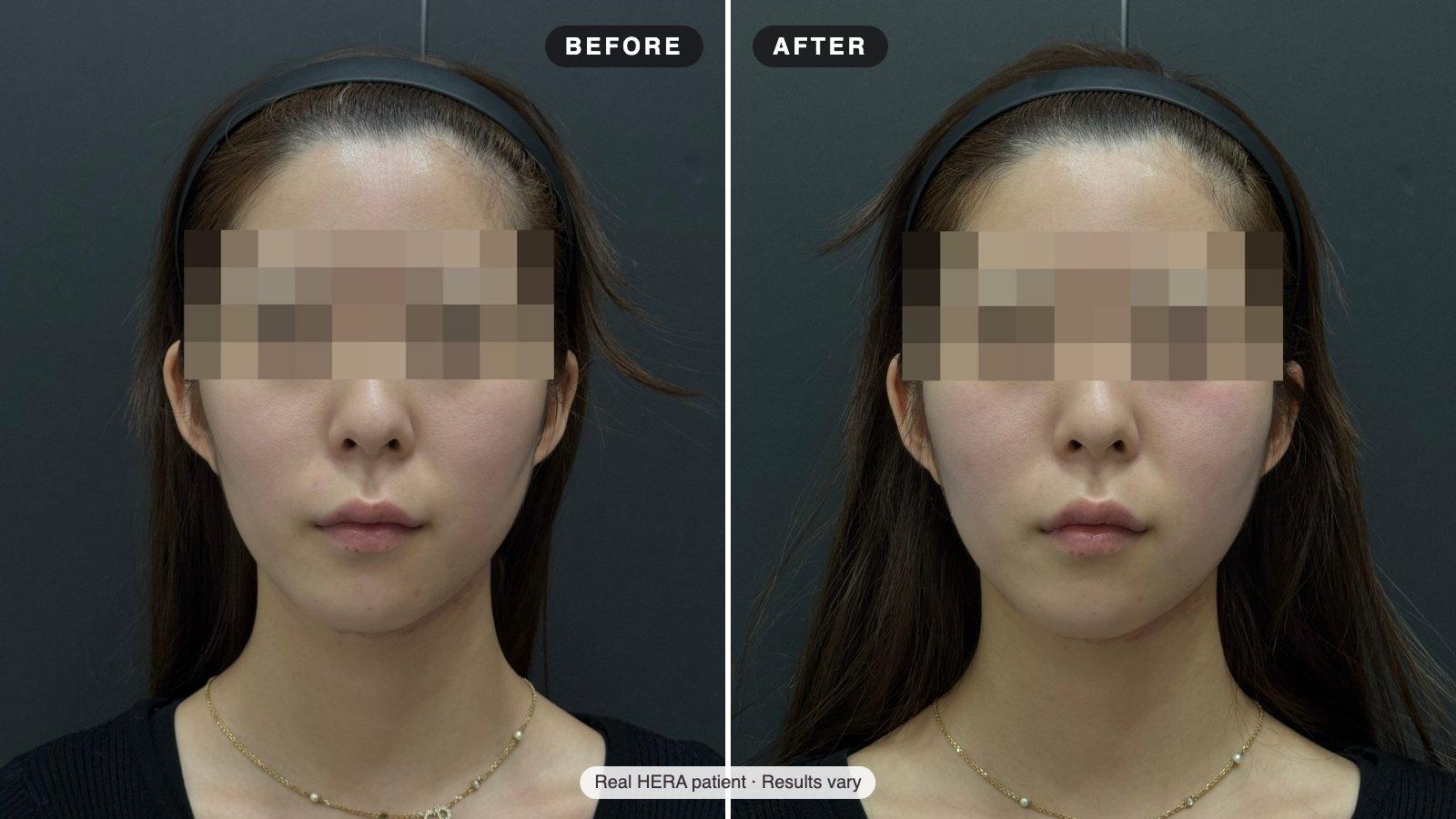
To see what realistic, well-judged results look like, our before-and-after gallery shows real HERA patients — not illustrations. The full clinical detail for cheek volume is on our facial filler page, and our first-timer's guide to fillers in Korea covers how a visit runs from start to finish.
Book a consultation
If you are worried about your cheek filler, send me a photograph from the front and from the side. We will arrange a consultation in Gangnam, or a photo review first if you are still abroad. An English interpreter joins every visit, and you receive an itemised written estimate before anything begins — international and local patients pay exactly the same.
FAQ
Frequently asked questions
Q1What makes cheek fillers look bad?
Usually too much volume, filler placed in the wrong layer, or filler at the wrong point on the cheek. The product itself is rarely the cause — how much was used, how deep it sits and where it was placed are.Q2Can bad cheek filler be fixed?
In most cases, yes. Hyaluronic-acid filler can be dissolved with an enzyme, and small lumps sometimes respond to massage or a small targeted adjustment. Adding more filler to hide an overfilled cheek is not the answer.Q3How long should I wait before judging my cheek filler?
About two weeks. Mild swelling, redness or a small bruise usually settles within two to three days, and the final contour shows once all swelling has gone.Q4When is a problem after cheek filler urgent?
Pain that worsens instead of easing, skin turning pale, dusky or mottled, or any change in vision. These are uncommon but need a doctor the same day.Q5How long does cheek filler last?
At HERA, domestic hyaluronic-acid fillers generally last around 6–12 months and imported ones 12–18 months. It varies with the area and your metabolism, and results vary from person to person.
真實經驗
患者怎麼說
由海外患者上傳的影片。




YouTube 上
出發前,先聽聽醫師怎麼說
我們的醫師在鏡頭前講解HERA的主力療程:拉提、玻尿酸與皮膚增強針,讓您在抵達首爾前,就知道會見到誰、他們怎麼思考。
韓語發音 · YouTube 提供自動翻譯字幕
- 6:24玻尿酸

 Dr. Jong · Dr. Jong
- 7:36診所與醫師Dr. Jong · Dr. Jong
- 8:07拉提Dr. Jong
- 5:44拉提Dr. Jong · Dr. Jong
Shorts
一個問題,不到一分鐘
HERA TV
The doctors explain it on camera — then in writing
Each piece is written by the doctor from their own YouTube video: the patient question, why it happens and how we approach it.
 6:56unlicensed filler injections
Unlicensed Filler Injections: The Real Risks, From Two Doctors
Dr. Jong Seon Kim7 min read 6:05wrinkles around mouth treatment
Wrinkles Around the Mouth: A CaHA, Ultherapy and RF Combination
Dr. Jong Hoon Lee7 min read 5:40elf ear filler
Elf Ear Filler: Shaping Flat Ears for a Smaller-Looking Face
Dr. Jong Seon Kim6 min read
HERA Journal
Keep reading
 Fillers
Non-Surgical Nose Lift: Three Clear Days Before You Fly
Nose filler swelling usually eases within two to three days and looks settled by about a week; threads take closer to a week. Treat at least three clear days before your flight, early in the trip.
9 minRead → Fillers
How Long Dermal Filler Lasts: Lips Go First, Under-Eyes Last
Hyaluronic acid filler usually lasts six months to a year. Lips sit at the short end, the nose bridge and under-eyes at the long end, and most swelling settles within a week of treatment.
8 minRead → Fillers
Which Dermal Filler Lasts the Longest? Longer Isn't Safer
Non-absorbable PMMA lasts the longest, then poly-L-lactic acid, then hyaluronic acid. For lips, nose and under-eyes I still choose hyaluronic acid, because it is the one common type that can be dissolved.
9 minRead →