How Much Is Chin Filler in Korea? What Actually Sets the Cost
 Dr. Jong Seon Kim · Director, Gangnam HERA6 min read
On this page
I'm Dr. Jong Seon Kim, a plastic surgeon at Gangnam HERA in Seoul and a board member of the International Petit Medical Society. Before patients book a flight, many of them send me a profile photograph and one direct question: "How much is chin filler in Korea — can you just give me a number?" I will be honest about why this article has no figure in it. The fair price for your chin depends on things I can only judge by looking at it: how much projection it needs, which product suits you, and whether the chin is treated alone. What I can do is explain exactly what moves the cost, and give you an itemised written estimate after consultation, before anything begins. International and local patients pay exactly the same.
Why is there no price on this page?
Because the honest number depends on your chin, and a figure written without an assessment is either too low to be true or padded to be safe. A published price becomes an anchor. Patients arrive expecting that number, and then either the plan is squeezed to fit it or the estimate feels like a surprise. Neither helps you.
A photo consultation gets much closer. From a front and side photograph I can usually tell whether your chin needs a small refinement or more projection, whether the jawline should be part of the plan, and whether filler is the right tool at all. The written estimate then lists every item, so nothing is added on the day without your agreement.

What actually changes the cost of chin filler?
Four things: how much filler your chin needs, which product is used, whether the chin is treated alone or with neighbouring areas, and how many sessions the plan involves.
1. The amount
A chin that only needs a slightly smoother surface uses less than a short, set-back chin that needs forward projection and a little length. I plan conservatively and review, because you can always add, while taking away means dissolving.
2. The product: domestic or imported
At HERA we use hyaluronic-acid fillers, and the main difference between domestic and imported products is how long they tend to last: around 6 to 12 months for domestic and 12 to 18 months for imported ones, depending on the area and your metabolism. An imported product usually costs more per session but may need topping up less often. That trade-off is yours to make, and I will show you both options on the estimate.
3. Chin alone, or with the jawline
Many chins look best when they are planned with the jawline, because the chin is where the lower-face curve finishes. Adding the jawline adds product and time. Whether it is worth it depends on your face, and our guide to chin filler in Korea explains when the chin should be treated on its own.
4. One session or a staged plan
For a larger change I often prefer two smaller sessions with a review between them. That can change the total, and the estimate shows it up front.
Do international patients pay more for chin filler in Korea?
No — at HERA international and local patients pay exactly the same, and the written estimate is the same document. An English interpreter joins every visit so you understand each line of the estimate before you agree to it. If anything in the plan changes during the consultation, the estimate changes with it, in writing, before treatment begins.
What should a chin filler estimate include?
The product and whether it is domestic or imported, the amount, the area or areas, who injects, and what happens if an adjustment is needed. If you are comparing quotes, compare them on the same basis:
- Product: the name, and whether it is domestic or imported
- Amount: how much filler is planned for the chin
- Areas: chin only, or chin plus jawline or other areas
- Injector: whether a physician performs the injection
- Follow-up: whether a review is planned and how adjustments are handled
A quote that uses a smaller amount or a different product is not the same treatment, even if the word "chin" is on both. Asking these questions is not rude; it is how you compare like with like.
How does longevity change what you spend over time?
A filler that lasts longer is repeated less often, so compare the cost per year of result rather than the cost of one visit. If you travel to Seoul once a year, a product that tends to last longer may suit your calendar better; if you live nearby or visit often, a domestic product with more frequent top-ups can make sense. Results vary from person to person. The chin is also a mobile area, so I would rather give you a realistic range at consultation than promise a date.
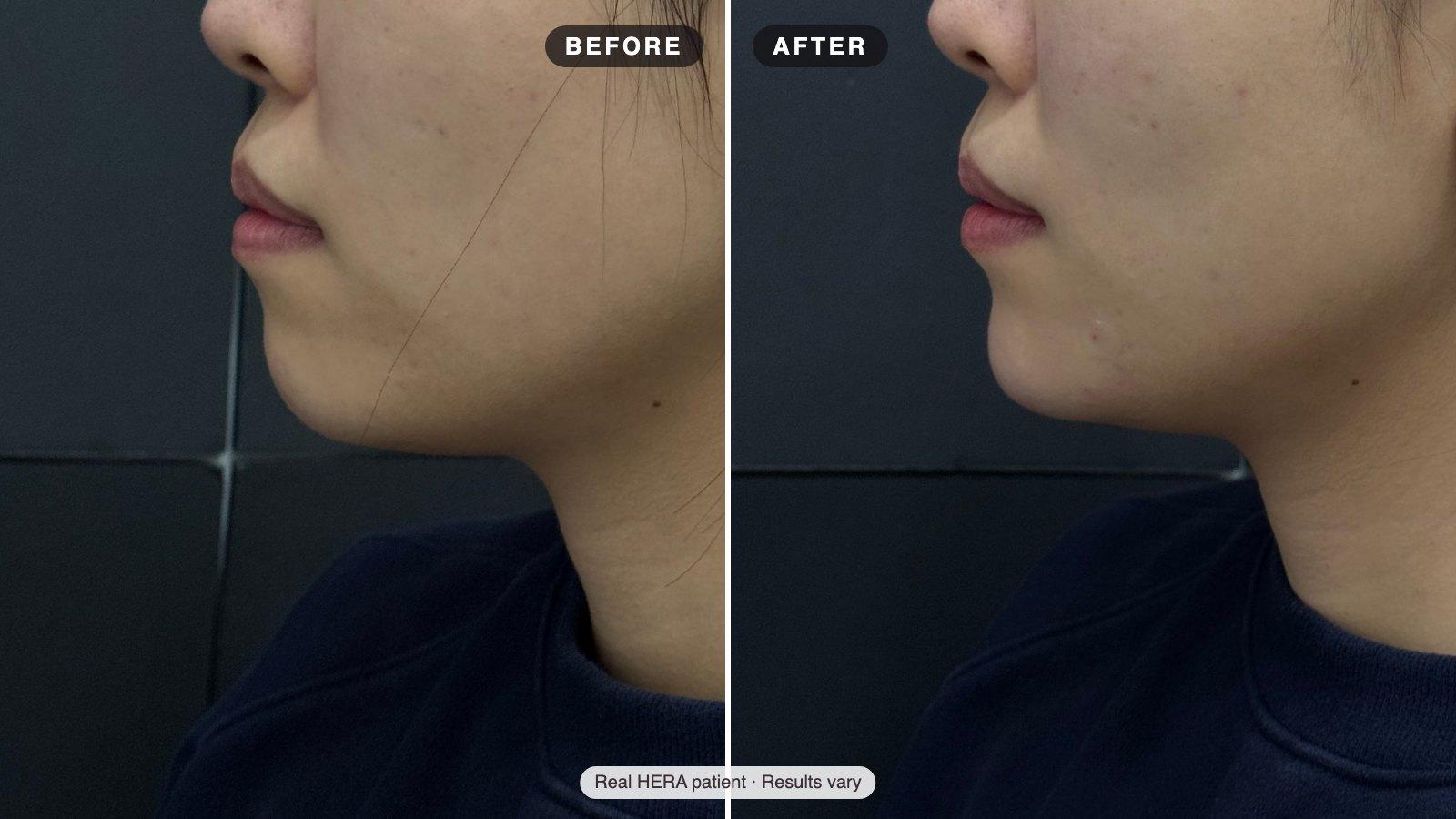
If you want to see what a measured result looks like before you decide, our before-and-after gallery shows real HERA filler cases.
Could a different treatment be the better spend?
Sometimes — if the issue is fat under the chin or a wide jaw, filler would be money spent on the wrong problem. Fullness under the chin is usually fat, which our Sok-Sok Face injection targets; fat-dissolving injections in Korea explains how that works. A square lower face from the masseter muscle is a wrinkle-relaxing injection question, covered in Wrinkle-relaxing injection for the jawline. I would rather tell you this at the photo stage than sell you filler that does not address the concern.
What patients ask me next
These are the cost questions I hear most after the first one.
"Can you give me an estimate over WhatsApp?"
From photographs I can tell you what the plan is likely to involve — which areas, which product options, one session or two. The itemised written estimate is confirmed at consultation, once I have examined your chin in person.
"Does more filler give a better result?"
No. A chin that looks too long or too pointed is almost always over-filled. The right amount is the one that fits your profile, and it is often less than patients expect.
"How does this compare with other filler areas?"
The same four factors apply everywhere. Our Korean filler price guide covers filler in general, and jawline filler price in Korea covers the neighbouring area. If this is your first filler, the first-timer's guide to fillers in Korea explains how a visit runs.
The honest limits
Chin filler is a temporary treatment, so its real cost includes maintenance. It builds projection over the chin you have and wears off over months; it cannot change bone, narrow a wide chin or remove a double chin. A lower price that comes from less product or a different product is a different treatment, not a better deal. What I can promise is an estimate you can read line by line, a plan that treats the right problem, and a conservative first session rather than an oversized one. The clinical detail is on our facial filler page.
Book a consultation
If you would like a plan and a written estimate for your chin, send a photograph from the front and one from the side. We will arrange a consultation in Gangnam, or a photo consultation first if you are still abroad. An English interpreter joins every visit, and you receive an itemised written estimate before anything begins — international and local patients pay exactly the same.
FAQ
Frequently asked questions
Q1How much is chin filler in Korea?
It depends on how much filler your chin needs, whether a domestic or imported product is used, whether other areas are treated, and how many sessions are planned. At HERA you receive an itemised written estimate after consultation, before anything begins.Q2Do foreigners pay more for chin filler at HERA?
No. International and local patients pay exactly the same, and an English interpreter joins every visit.Q3Why does imported filler cost more?
Imported fillers usually cost more per session but tend to last longer — at HERA around 12–18 months versus 6–12 months for domestic products, depending on the area and metabolism.Q4Can I get a chin filler estimate before I travel?
Yes, a photo consultation can outline the likely plan and product options. The itemised written estimate is confirmed once the doctor has examined your chin in person.Q5Is cheaper chin filler the same treatment?
Not necessarily. A lower quote may use less filler or a different product, so compare the product, amount, areas, injector and follow-up rather than the headline figure.
Real stories
What Our Patients Say
Videos posted by patients who came from abroad.




On YouTube
Hear it from the doctors before you fly
Our doctors explain HERA's main treatments, lifting, filler and skin boosters, on camera, so you know who you are meeting and how they think before you land in Seoul.
Korean audio · auto-translated captions available on YouTube
- 6:24Filler

 Dr. Jong · Dr. Jong
- 7:36Clinic & doctorsDr. Jong · Dr. Jong
- 8:07LiftingDr. Jong
- 5:44LiftingDr. Jong · Dr. Jong
Shorts
One question, under a minute
HERA TV
The doctors explain it on camera — then in writing
Each piece is written by the doctor from their own YouTube video: the patient question, why it happens and how we approach it.
 6:56unlicensed filler injections
Unlicensed Filler Injections: The Real Risks, From Two Doctors
Dr. Jong Seon Kim7 min read 6:05wrinkles around mouth treatment
Wrinkles Around the Mouth: A CaHA, Ultherapy and RF Combination
Dr. Jong Hoon Lee7 min read 5:40elf ear filler
Elf Ear Filler: Shaping Flat Ears for a Smaller-Looking Face
Dr. Jong Seon Kim6 min read
HERA Journal
Keep reading
 Fillers
Non-Surgical Nose Lift: Three Clear Days Before You Fly
Nose filler swelling usually eases within two to three days and looks settled by about a week; threads take closer to a week. Treat at least three clear days before your flight, early in the trip.
9 minRead → Fillers
How Long Dermal Filler Lasts: Lips Go First, Under-Eyes Last
Hyaluronic acid filler usually lasts six months to a year. Lips sit at the short end, the nose bridge and under-eyes at the long end, and most swelling settles within a week of treatment.
8 minRead → Fillers
Which Dermal Filler Lasts the Longest? Longer Isn't Safer
Non-absorbable PMMA lasts the longest, then poly-L-lactic acid, then hyaluronic acid. For lips, nose and under-eyes I still choose hyaluronic acid, because it is the one common type that can be dissolved.
9 minRead →
Visit us
Find Gangnam HERA
In Seocho-gu, Seoul, a three-minute walk from Gangnam Station Exit 9. Tap the map for directions.
Address
4F, 9 Seocho-daero 73-gil, Seocho-gu, Seoul, Republic of Korea
Opening Hours
Tuesday, Wednesday, and Thursday: 10:00 AM – 7:00 PM; Monday, Friday: 10:00 AM – 8:00 PM; Saturday: 10:00 AM – 5:00 PM; Lunch break: 1:00 PM – 2:00 PM; Closed on Sundays and public holidays