A Case Story, In the Director's Words
Second Titanium Lifting Session: STACK + SHR at 20 kJ Each — A Real Patient Review
Dr. Lee Jong Hoon explains Camille's second Titanium Lifting: what STACK and SHR modes do, what 20 kJ per mode (40 kJ total) means, and why a stronger session can feel stronger — 5/10 this time.

As told by
Dr. Lee Jong Hoon
Lifting Specialist, Gangnam HERA
Watch the Case
Tap to play Julie's reel — it opens right here, no app needed.
Hello, I'm Dr. Lee Jong Hoon, the lifting specialist at Gangnam HERA — co-author of LIFTINGOLOGY and a foundation member of the Korean Academy of Facelift & Contouring. Camille (@camillelaseoulite) is a useful case to learn from, because this was not her first Titanium Lifting — it was her second. She also did something most patients don't: she wrote down her settings. Her caption explains the two modes in her own words, records "20 kilojoules per mode, for a total of 40 kilojoules," and rates the pain at 5/10. In her video she adds that the first time she had felt no pain at all, perhaps because the intensity was lower. That contrast — more energy, more sensation — is what I want to unpack here, because it is the question repeat patients ask me most often.
What are STACK mode and SHR mode?
They are two ways of delivering the same laser, aimed at different depths. Soprano Titanium fires three wavelengths together — 1064nm, 810nm and 755nm. In Stack mode the handpiece stamps concentrated heat around the 8mm layer for an intensive lift and contour. In SHR mode it glides continuously, warming the 3–5mm layer evenly to improve tone and elasticity. Camille's own summary is accurate: STACK "works deep down to lift and redefine facial contours," and SHR is "a gliding technique that gently warms the skin and boosts collagen." We combine them because each covers what the other does less well — Stack for structure and contour, SHR for even, comfortable warming across the whole face.
What does "20 kJ per mode" actually mean?
It is the total energy delivered in each mode across the treated area: 20 kJ in Stack and 20 kJ in SHR, 40 kJ in all. It is not a universal dose. We set energy per patient and per area, based on skin thickness, how the skin responds during treatment, and how a previous session went. I would gently discourage anyone from comparing kilojoule numbers with a friend or between clinics as a measure of quality — the right number is the one your skin tolerates and responds to, delivered evenly where it is needed. Camille felt that the higher intensity is what makes the difference in results; more energy can mean a stronger stimulus, but only when the skin is ready for it, and that is a clinical judgement, not a target. For a repeat patient who already knew she wanted nothing invasive and had tolerated Titanium comfortably before, a fuller session was a reasonable plan.
Why did the second session feel stronger than the first?
Mainly because more energy was delivered. Sensation tracks energy: a lighter session can feel like almost nothing, while a fuller one produces more noticeable heat. Camille went from no pain on her first session to 5/10 on this one, and called it "totally manageable." Before treatment our team applied numbing cream and covered it so it could work, and the handpiece's continuous contact cooling protected the surface throughout. Afterwards she had "a bit of redness right after, but nothing once I left," plus "a slight cotton-like feeling in my jaw, which disappeared within an hour," and the session finished with a soothing mask. That is in line with what we expect from Titanium: virtually no downtime, with mild warmth or slight flushing that fades quickly. The cotton-like jaw sensation was her own experience; not everyone notices it.
How do we plan a repeat Titanium session?
We start again with a consultation — Camille's visit began with a quick consultation and a meeting with the doctor, not with the device. We ask how the first session went, how long she felt the effect, and what she wants more of this time, then decide the balance between Stack and SHR and the energy for each. In general a single session gives a visible effect, but a short series is often recommended for stronger, longer-lasting elasticity, and results typically last around 6–12 months depending on skin condition. So the timing of a repeat session depends on how your own result holds, rather than on a fixed calendar. Results vary from person to person.
What did we not do, and what could come next?
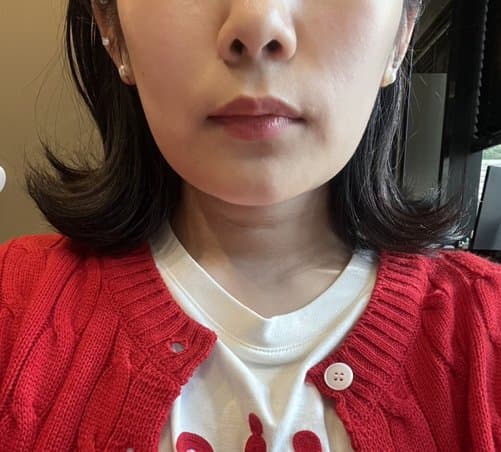
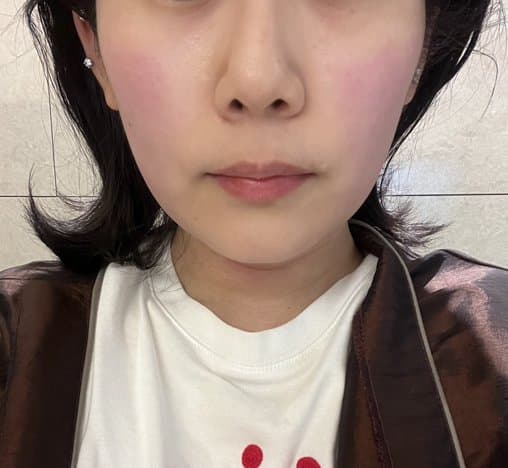
We did not add injectables or threads — Camille was clear that she wanted nothing invasive, and Titanium alone matched that goal. Raising energy is one way to strengthen a repeat session; another, for patients who want a deeper effect at the SMAS layer, is to pair Titanium with 10Thera ultrasound in what we call Dual-Line Tenti. Below are real HERA patients whose lifting plan included Soprano Titanium — in their case paired with 10Thera as Dual-Line Tenti, so the photos show the combined treatment rather than Titanium alone. Camille also thanked the team for being professional and quick to reply on Instagram, which is how many of our international patients first reach us. At Gangnam HERA, international patients receive a written quote after consultation and pay the same price as our Korean patients — no foreigner markup.
Real results from HERA patients
Other HERA patients who had the same treatment — real photos, not this creator. Results vary from person to person.
See all before & after cases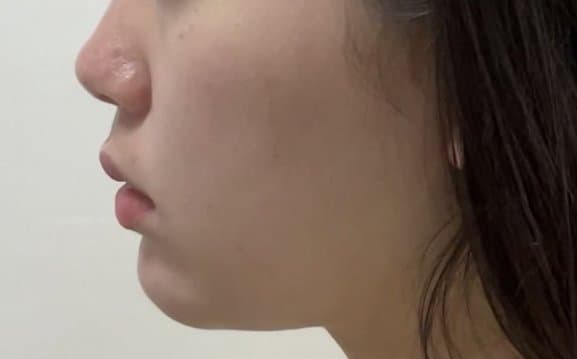

Is This for You?
Who this treatment is genuinely for
Signs it may be time to consider it
- Your first Titanium session felt like almost nothing and you wonder if it was strong enough
- You liked your first result and want to know when to go again
- You want more contour along the jawline, not just brighter skin
- You've seen kJ numbers online and want them explained honestly
- You prefer to strengthen a non-invasive treatment rather than move to injections
It's a good fit if
- You've had Titanium Lifting before and want to understand how a repeat session is planned
- You want to know the difference between Stack mode and SHR mode
- You're curious what energy numbers like 20 kJ per mode mean for you
- You want a lift and contour without anything invasive
Not the right first step if: It isn't the right choice if your main concern is significant volume loss or heavy sagging, or if you have an active skin infection or inflammation in the treatment area — energy and modes are always set at an in-person consultation.
“If you're planning a second Titanium session, bring what you remember from the first — how it felt and how long the effect lasted. That tells me far more than any kJ number, and lets me set Stack and SHR for your skin rather than for an average.”
Good to Know
Questions patients actually ask
What is the difference between Stack mode and SHR mode?
Is 20 kJ per mode a standard dose?
Why does a second session sometimes hurt more?
How often should Titanium Lifting be repeated?
Is there downtime after a higher-energy session?
Considering the same?
Have Dr. Lee Jong Hoon review your case
Send us a photo and your concern. Dr. Lee Jong Hoon will tell you honestly whether this treatment is right for you — no pressure, same price as our Korean patients.
Keep Reading
More case files
 @mei.meimaLip Filler + Chin Filler (Combined Lower-Face Plan)
Lip and Chin Filler in One Visit — A Real Patient Review
Dr. Kim Jong Seon explains Mei's lip and chin filler visit: why the two areas are planned as one lower-face unit, how the session runs, and what her Day 1 and Day 2 photos show.
#LipFiller#ChinFiller#LowerFaceBalanceRead the case @yujin.in.seoul10THERA (HIFU) Non-Surgical Face Lift — Custom Face Mapping
10THERA With Custom Face Mapping: A Natural First Lift — Real Patient Review
Dr. Lee Jong Hoon explains Yujin's first non-surgical face lift — how custom mapping to her bone structure shaped her 10THERA session, and what to expect 14 days later.
#10THERA#NonSurgicalFacelift#FaceMappingRead the case @takemefxrfromhomeAqua Glow Injection (Water-Glow Skin Booster, 물광주사)
Water-Glow Injection as a First Clinic Visit — A Real Patient Review
Dr. Han Jin Yi explains Jade's first-ever aesthetic clinic visit after eight years in Korea: why a water-glow (물광) hyaluronic acid booster suits a first step, the treatment steps, and recovery.
#WaterGlowInjection#물광주사#SkinBoosterRead the case