Cheek Filler Cost in Korea: What Sets the Price, Zone by Zone
 Dr. Jong Seon Kim · Director, Gangnam HERA7 min read
On this page
I'm Dr. Jong Seon Kim, director of Gangnam HERA in Seoul. I sit on the board of the Korean Society of Aesthetic Surgery (KSAS) and of the International Petit Medical Society. Cheek questions from abroad usually arrive with a screenshot of a price list and one line: "How much is cheek filler in Korea, and why do clinics quote such different numbers?" My answer first: cheek filler has no single price because "the cheek" is not one place. The front of the cheek, the area over the cheekbone and the hollow beneath it are planned separately, need different amounts, and sometimes need nothing at all. You receive an itemised written estimate after consultation, and international and local patients pay exactly the same.
Why is there no cheek filler price on this page?
Because two people who both say "my cheeks" can need completely different plans, and a headline number would only describe one of them. One patient has a flat front cheek and wants a softer, fuller look from the front. Another has a hollow under the cheekbone that makes the face look drawn from the side. A third has lost volume in the temples, and the cheek only looks wrong because of the shadow above it. Those are three different treatments with three different estimates.
Online price lists usually show one figure "per area", and that is where comparison goes wrong. What actually moves the cost is how many zones are treated, how much product each one needs, which filler is used and whether anything already in the cheek has to be dealt with first. When you compare quotes, compare those lines — not the total at the bottom.
Which part of the cheek are you paying to treat?
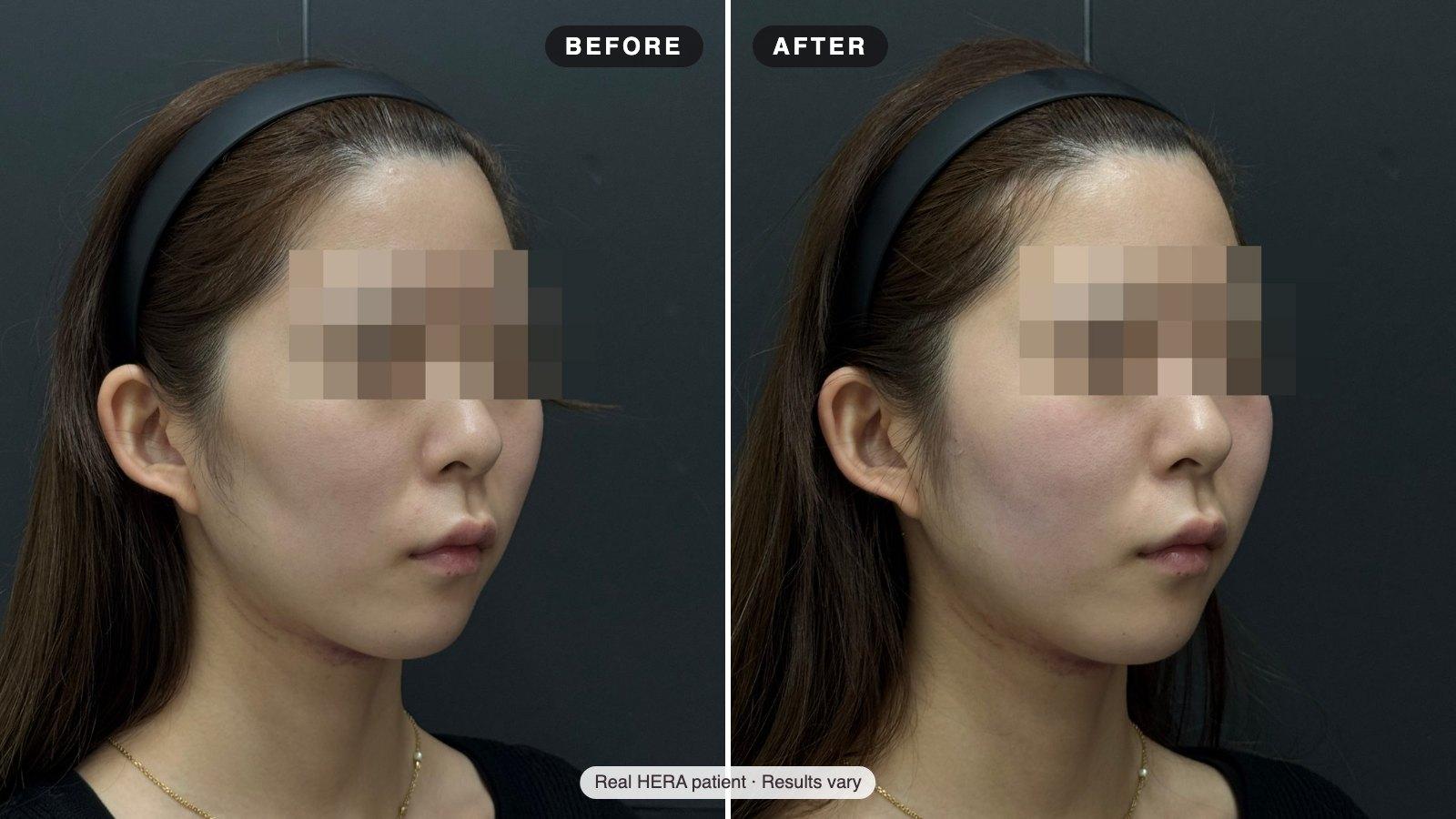
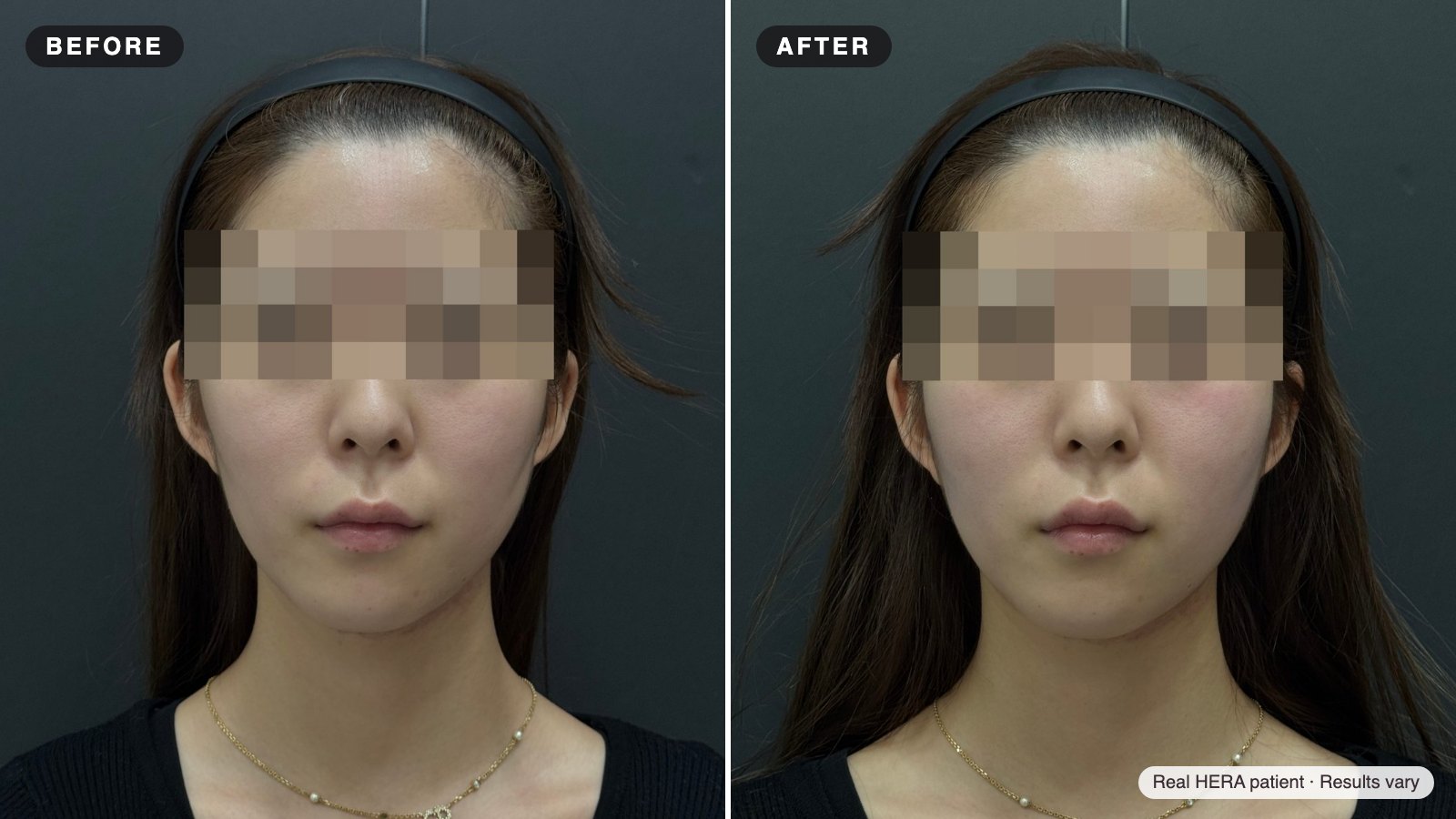
The zone sets most of the plan: the front (central) cheek, the area over and near the cheekbone, and the hollow beneath it are each assessed and listed on their own.
The front cheek
Filler in the central cheek adds dimension when the mid-face has flattened, so the face looks fresher from the front. It is the zone most people mean when they say "cheek filler", and the one most often overdone — the mid-cheek has a limit, and beyond it the face starts to look round rather than lifted.
Over and near the cheekbone
Volume placed near the cheekbones gives a more three-dimensional contour, and it is often planned as part of one connected line from the forehead and temples down to the jaw. That connected design is what our C-line lifting filler page describes, and it is estimated as a design rather than spot by spot.
The hollow beneath the cheekbone
A side-cheek hollow makes a face look tired or gaunt from an angle. It is one of the zones where people tend to expect a large amount, and where a measured amount placed at the right depth usually looks better.
The two sides of a face are rarely identical, so one side may need a little more than the other. That is written into the estimate too, rather than averaged out.
Is "cheekbone filler" a different cost conversation?
Partly — filler supports a cheekbone, it does not build a new one, and that changes what is worth paying for. If your cheekbone is flat at the front, a small amount of filler can give it soft definition. If your concern is a wide or prominent cheekbone, adding filler will not make it narrower; it tends to make the face look wider. In that case the most useful thing an honest consultation can do is tell you not to spend money on filler there.
Sometimes the cheekbone only looks too prominent because the area beneath it has hollowed. Softening that hollow can make the contour look smoother without placing anything on the bone itself. That is a different plan — and usually a smaller one — than "cheekbone filler" in the sense most price lists mean.
How do amount and product change a cheek estimate?
The amount follows your face rather than a package, and the product — domestic or imported hyaluronic acid — is its own line on the estimate. I do not sell cheeks by a fixed number of syringes. The doctor who designs the plan marks the points first and decides the amount for each zone; for a first treatment I aim below what the face could take, not at it.
HERA uses hyaluronic-acid filler, with domestic and imported options. Domestic fillers typically last around 6 to 12 months and imported fillers around 12 to 18 months, varying with the area and your metabolism. That is the real trade-off when you budget over a year: one is maintained more often, the other less often. For a patient who comes to Seoul once a year, that rhythm often decides the product more than anything else. If you want the product question in depth, see Korean filler vs Juvederm.
One thing I will not do is add product to make filler "last longer". A bigger deposit in a part of the face that moves every time you smile does not buy you time; it buys you a heavier cheek.
When does a cheek plan run in two stages?
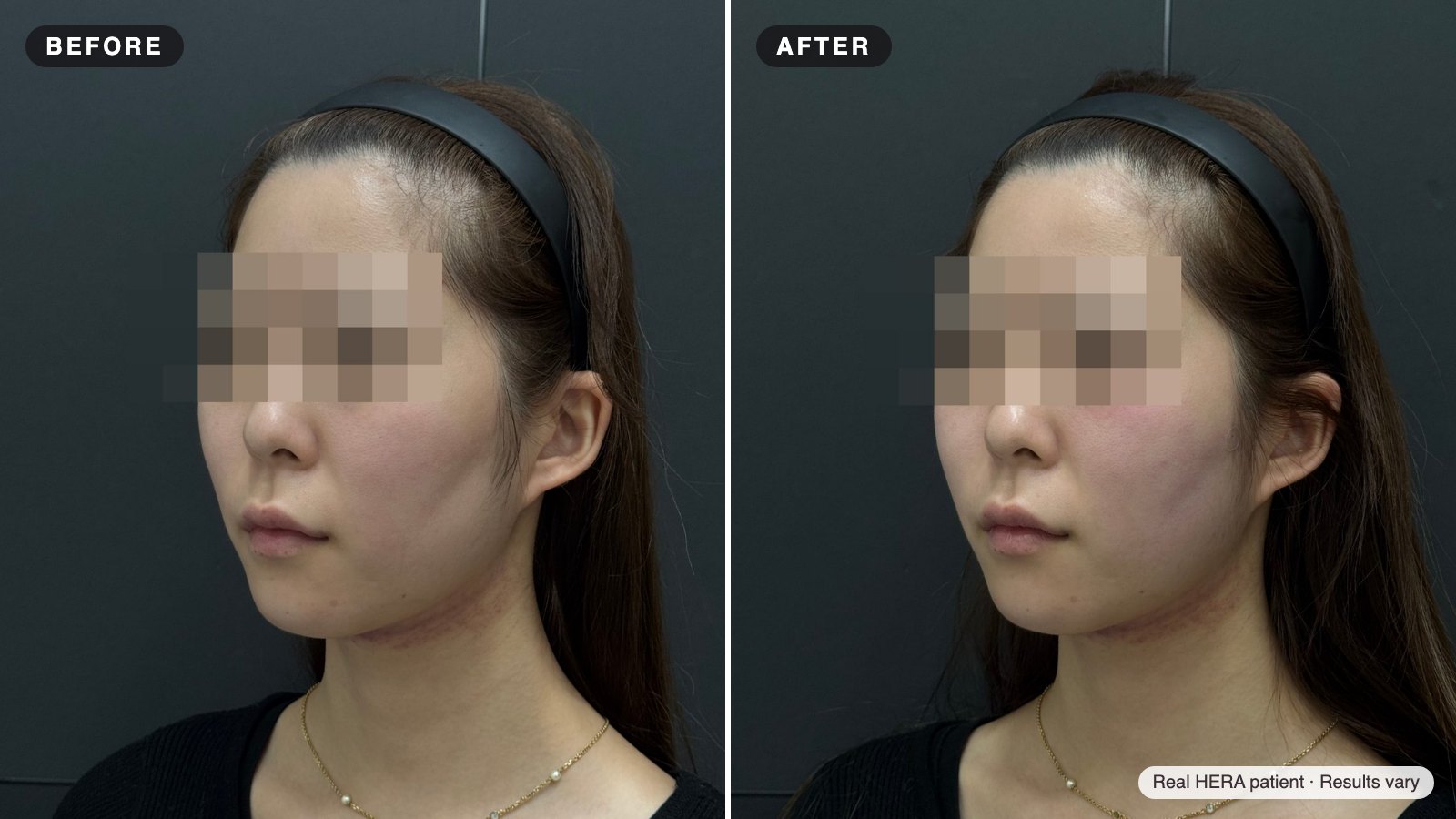
When the hollow is deep, when the two sides clearly differ, or when it is your first cheek treatment, I usually plan a conservative first session and a review rather than finishing everything at once. The cheek moves when you talk and smile, and the final shape shows only once swelling has settled. Mild swelling, redness or a small bruise usually settles within two to three days, but I judge the contour far better at a review than on the day.
Staging changes the estimate in a simple way. The first session is planned at a measured amount, and anything added at the review is agreed then, in writing, as a separate line. Many patients find they need less at the review than they expected, and some need nothing. For overseas patients I try to fit both visits into one stay, so book the first early in your trip rather than the day before you fly.
What else can end up on the estimate — or come off it?
Dissolving earlier filler, treating the temples, or switching to a lifting treatment can all change the total, and each is listed separately so you can decide item by item.
- Earlier filler: if previous cheek filler has made the face look puffy or low, the honest first step may be to dissolve it before adding anything. Our guide to bad cheek fillers explains why that happens and how it is corrected.
- Temples: restoring a hollow temple often reduces how much the cheek needs, because the upper face is read as one outline. The temple filler cost guide explains how that area is estimated.
- Nasolabial folds: support in the cheek can soften the fold below it. Whether the fold itself needs filler is covered in the nasolabial fold filler cost guide.
- Sagging rather than volume loss: if the cheek has descended, filler is the wrong spend. Lifting addresses that — see the cheek thread lift before-and-after guide.
- A collagen-stimulating option: for sunken cheeks, DCLASSY CaHA Filler (CaHA) is another tool, reinforcing lost support while new collagen builds.
What else do patients ask about cheek filler cost?
They usually ask whether a photograph is enough for an estimate, whether cheaper filler is a risk, and how long treatment takes.
"Can you estimate from a photograph?"
A photo consultation lets us agree the likely zones before you travel. I confirm the written estimate after examining you in person, because depth and asymmetry are much easier to judge face to face. Send one photograph from the front and one at an angle, in natural light.
"Is cheaper cheek filler a risk?"
The risk is rarely the price itself; it is what a low price leaves out — a doctor's assessment, marking, the right depth and a review. Our Korean filler price guide lists the questions worth asking any clinic. Pain that keeps getting worse, or skin turning pale, dusky or mottled after any filler, needs a doctor the same day. It is uncommon, and it is why a physician performs every injection at HERA.
"How long does the treatment take?"
Usually around 10 to 15 minutes of treatment time, with topical ointment or local anaesthesia. Most people go back to their day straight away.
What can cheek filler not do, whatever you spend?
Cheek filler restores volume; it does not lift a sagging cheek, narrow a wide cheekbone or make a face smaller. It is not permanent, and in this area more product is not a better result. Results vary from person to person. What I can offer is an assessment of which zone is actually behind the look you want to change, a measured first session, and an itemised estimate that shows exactly what you are paying for. Real HERA cheek cases are in our before-and-after gallery, the clinical detail is on the facial filler page, and the first-timer's guide to fillers in Korea explains how a visit runs.
Book a consultation
If you would like a cheek plan and a written estimate, send me a photograph of your face from the front and at a slight angle, in natural light. We will arrange a consultation in Gangnam, or a photo consultation first if you are still abroad. An English interpreter joins every visit, and you receive an itemised written estimate before anything begins — international and local patients pay exactly the same.
FAQ
Frequently asked questions
Q1How much is cheek filler in Korea?
It depends on your plan, so HERA gives an itemised written estimate after consultation rather than one online price. The cost changes with which zones are treated — front cheek, cheekbone area or the hollow beneath — the amount, domestic or imported product, and whether earlier filler needs dissolving first.Q2Is cheekbone filler priced the same way as cheek filler?
Yes, it is estimated by zone and amount in the same way, but it suits fewer people. Filler can give soft definition to a flat cheekbone; it cannot narrow a wide one, and in that case HERA will advise against spending on it.Q3Do foreigners pay more for cheek filler at HERA?
No. International and local patients pay exactly the same, and every item is agreed in writing before treatment begins.Q4How long does cheek filler last?
At HERA, domestic hyaluronic-acid fillers typically last around 6–12 months and imported ones 12–18 months, varying with the area and individual metabolism.Q5Why would cheek filler be done in two sessions?
Because a deep hollow, clear asymmetry or a first treatment is better built gradually. A conservative first session is followed by a review, and anything added then is agreed as a separate line on the estimate.
เรื่องจริงจากผู้ป่วย
เสียงจากผู้ป่วยของเรา
วิดีโอที่ผู้ป่วยจากต่างประเทศโพสต์ไว้




บน YouTube
ฟังจากแพทย์ก่อนเดินทาง
แพทย์ของเราอธิบายทรีตเมนต์หลักของ HERA ได้แก่ ยกกระชับ ฟิลเลอร์ และสกินบูสเตอร์ ผ่านวิดีโอ เพื่อให้คุณรู้ว่าจะได้พบใครและแพทย์คิดอย่างไร ก่อนที่คุณจะเดินทางถึงโซล
เสียงภาษาเกาหลี · มีคำบรรยายแปลอัตโนมัติบน YouTube
- 6:24ฟิลเลอร์

 Dr. Jong · Dr. Jong
- 7:36คลินิกและแพทย์Dr. Jong · Dr. Jong
- 8:07ยกกระชับDr. Jong
- 5:44ยกกระชับDr. Jong · Dr. Jong
Shorts
คำถามเดียว ไม่ถึงหนึ่งนาที
HERA TV
The doctors explain it on camera — then in writing
Each piece is written by the doctor from their own YouTube video: the patient question, why it happens and how we approach it.
 6:56unlicensed filler injections
Unlicensed Filler Injections: The Real Risks, From Two Doctors
Dr. Jong Seon Kim7 min read 6:05wrinkles around mouth treatment
Wrinkles Around the Mouth: A CaHA, Ultherapy and RF Combination
Dr. Jong Hoon Lee7 min read 5:40elf ear filler
Elf Ear Filler: Shaping Flat Ears for a Smaller-Looking Face
Dr. Jong Seon Kim6 min read
HERA Journal
Keep reading
 Fillers
Non-Surgical Nose Lift: Three Clear Days Before You Fly
Nose filler swelling usually eases within two to three days and looks settled by about a week; threads take closer to a week. Treat at least three clear days before your flight, early in the trip.
9 minRead → Fillers
How Long Dermal Filler Lasts: Lips Go First, Under-Eyes Last
Hyaluronic acid filler usually lasts six months to a year. Lips sit at the short end, the nose bridge and under-eyes at the long end, and most swelling settles within a week of treatment.
8 minRead → Fillers
Which Dermal Filler Lasts the Longest? Longer Isn't Safer
Non-absorbable PMMA lasts the longest, then poly-L-lactic acid, then hyaluronic acid. For lips, nose and under-eyes I still choose hyaluronic acid, because it is the one common type that can be dissolved.
9 minRead →
มาหาเรา
ที่ตั้ง Gangnam HERA
ในเขตซอโช โซล เดิน 3 นาทีจากสถานีคังนัม ทางออก 9 แตะแผนที่เพื่อดูเส้นทาง
ที่อยู่
4F, 9 Seocho-daero 73-gil, Seocho-gu, Seoul, Republic of Korea
เวลาทำการ
วันอังคาร พุธ และพฤหัสบดี: 10:00 – 19:00 น.; วันจันทร์ ศุกร์: 10:00 – 20:00 น.; วันเสาร์: 10:00 – 17:00 น.; พักกลางวัน: 13:00 – 14:00 น.; ปิดวันอาทิตย์และวันหยุดนักขัตฤกษ์