Korean Ear Filler: How Many Days? Cost, Reviews, Methods
 Dr. Jong Seon Kim · Director, Gangnam HERA9 min readLast updated
On this page
Planning Korean ear filler on a short trip and worried your ears will still be sore or swollen on the flight home?
Read this while your travel dates are still open.
By the end you'll know which methods ear filler uses, what reviews get right and wrong, what decides the cost, and how many days to give it in Seoul. That's enough to pick a plan that fits your ears, your budget and a short trip.
Hello, I'm Dr. Jong Seon Kim, Director, Gangnam HERA Plastic Surgery Clinic, and a board member of the International Petit Medical Society.
At HERA, the specialist who consults with you is the one who injects your ears. We use only genuine, approved products, and the sealed vial is opened in front of you. Korean and foreign patients pay the same price, you get a written estimate up front, and an English interpreter is available for the consultation.
I'm writing this because ear filler sounds so minor that people often squeeze it into the last afternoon of a trip, and that's the one slot I'd avoid.
Ear filler is a short hyaluronic acid injection along the rim, behind the upper ear or into the lobe. Tenderness and mild swelling usually ease within a few days, so book it early in your stay and keep at least one day with clinic hours between the injection and your flight.
If you're unsure whether filler can do what you want for your ears, send a side photo of each ear and one from the front on WhatsApp, along with the one question on your mind, for example whether one session is likely to be enough.
Book a consultation
Send us your question or a photo on WhatsApp and we will reply in English.
Who ear filler suits, and who needs something else
Filler adds a small amount of volume under thin skin. On an ear, that can give a flat rim a fuller curve, let the edge of the ear show a little more from the front, plump a thin or flattened lobe, or even out a small difference between your two ears. I think of it as a subtle refinement of shape, so the ears sit in balance with the rest of your face. Expect that scale of change.
What filler can't do is pull a protruding ear back toward the head, repair an earlobe torn by heavy earrings, or reshape stiff cartilage. Ears that stick out noticeably are a job for ear surgery (otoplasty), a separate operation that isn't on our treatment menu.
The question that sorts most cases is whether the change you want comes from missing volume or from the angle and shape of the cartilage. Volume is filler territory. Angle usually isn't, and gel pushed against stiff cartilage tends to look lumpy rather than reshaped.
Two related searches land here by accident. Ear cartilage for a nose bridge is a graft taken during rhinoplasty, which is surgery; if your nose is the real interest, our guide to what nose filler can and cannot do covers the non-surgical side. Ear acupuncture in Seoul belongs to a different field and isn't something we offer.
Which methods does ear filler involve?
Most ear filler uses hyaluronic acid (HA), the same family of gel used in lips and cheeks. The American Society of Plastic Surgeons lists HA among the main filler types, and because the body breaks it down over time, the change is temporary. Where it goes on an ear follows what you want to change:
- Rim (helix): a thin line of filler along the outer edge to give it a rounder curve.
- Behind the upper ear: some techniques place filler where the upper ear meets the head, so the ear angles out slightly and shows more from the front.
- Lobe: a small amount to fill a thin or flat lobe.
Doctors use either a fine needle or a blunt cannula, chosen for the area and the depth. The skin over ear cartilage is tight, with very little room underneath, so the amounts are small. Too much shows as a ridge in a side view. My position on every area holds here too: only what is truly needed, no overtreatment.
A side view reads the ear together with the jawline and chin, which is why some people ask about chin filler in Korea in the same consultation. If this would be your first filler of any kind, a first-timer's guide to fillers in Korea covers the basics I won't repeat here.
What do reviews of Korean ear filler get right and wrong?
Review threads tend to repeat four claims. Here's how each one holds up medically.
“No downtime.” Partly true. You can walk out and sightsee the same day, but an ear gets pressed on more than people expect: by a pillow, a mask loop, headphones. That pressure can make the first few days more tender than a cheek would be.
“It makes your face look smaller.” This one is about perception. When the ear rim shows a little from the front, some people feel the face reads narrower or softer. The face itself doesn't change size, so treat this as a matter of taste.
“It lasts for years.” HA breaks down gradually. How long it stays depends on the product, the amount and your own metabolism, and no one can promise a number for your ears.
“The injection hurts a lot.” The skin is tight over cartilage, so it can sting more than other areas, but the injection itself is short.
When you look at photos in reviews, lighting and head angle change how much ear shows from the front. Our guide on what a real filler result looks like explains what to check before you trust a picture.
How many days does ear filler recovery take?
For most people, the visible part is over within a week and the uncomfortable part within a few days. A typical first week looks like this:
| When | What you may notice | What to plan |
|---|---|---|
| Same day | Pinkness, tightness, small injection marks | Skip alcohol, sauna and hard workouts; sleep on your back |
| Days 1–3 | Swelling and tenderness peak, then ease | Loop masks behind your head; no over-ear headphones, helmets or heavy earrings |
| Days 4–7 | Most swelling gone; a small bruise may linger | The shape is easier to judge now |
| Day before your flight | Too soon to judge the shape | Not the day for the injection |
Before you fly
leave at least one day with clinic hours between the injection and your departure. The clinic is closed on Sundays and Korean public holidays, so count those days out.
Say you teach somewhere in Asia and have a four-day weekend: you land Thursday night and fly out Monday afternoon. Friday is your treatment day, and the clinic is open until 8 p.m. Saturday still has clinic hours, 10 a.m. to 5 p.m., if anything about the ear worries you. Sunday is for sightseeing with your mask looped behind your head, and on Monday you fly with two days of settling behind you. Ask when you book whether the consultation and the injection can happen on the same visit.
Now flip it. If your only open day in Seoul is a Saturday and your flight leaves Monday morning, the Sunday closure leaves no clinic day in between. I'd look at a different weekend for Korean ear filler rather than squeeze it in.
What decides the cost of ear filler for your case?
Five things set the cost, and most of them show up in a photo: which areas are treated (rim, behind the upper ear, lobe or a mix), one ear or both, how much product your shape needs, which filler suits the area, and whether you add another area in the same visit. Evening out two ears that differ can also mean different amounts on each side.
Where you're from doesn't change it. Korean and foreign patients pay the same price, and the written estimate comes before anything is injected, so you see what it covers before you agree. The same logic applies to other small areas, like filler for the hands.
To get a figure for your own ears, ask on WhatsApp what it would cost in your case and attach the same side photos.
What can go wrong, and who should wait?
Risks and side effects to know
Tenderness, redness, swelling, small bruises and little bumps you can feel along the rim are common after filler. The American Academy of Dermatology describes side effects like these as usual and short-lived; on an ear they typically ease over several days, and a bruise can take about a week.
Less often, a lump stays visible, the two ears settle unevenly, or filler sits slightly off where it was placed. Because HA can be dissolved with an enzyme called hyaluronidase, these can usually be corrected, though dissolving brings a few days of swelling of its own.
The rare but serious risk is filler entering or pressing on a blood vessel. The US FDA lists this among filler risks because it can damage the skin that vessel supplies. On an ear, the warning signs are skin that turns white, gray or blotchy, or pain that grows instead of easing.
As a general rule, hold off if the ear has an infection, an eczema flare or a piercing that's still healing; if you're pregnant or breastfeeding; or if you've reacted to a filler or to lidocaine before. If you take blood thinners or supplements that affect bleeding, mention them at the consultation, and don't stop a prescribed medicine on your own.
If a warning sign appears after you're home, see a local doctor or an emergency department that day, then let us know on WhatsApp. The US CDC's medical tourism guidance suggests keeping copies of your records and arranging follow-up care at home before you travel, so note the product name before you leave Seoul.
Results vary from person to person, and the final plan for your ears is set at the face-to-face consultation.
What you can check on the day
Two things are worth watching for yourself. The specialist you talk to at the consultation is the one who injects, so your questions go to the person holding the syringe. And the sealed vial is opened in front of you: read the label and keep the product name. We don't rush through high volumes, so there's time to ask.
The treatment itself. If you want the clinical detail — who it suits, how a session runs, recovery and the honest limits — it is set out on our General Facial Fillers page.
Visiting HERA in Gangnam
We're at 4F, 9 Seocho-daero 73-gil, Seocho-gu, Seoul, three minutes from Gangnam Station. Hours are Monday and Friday 10:00–20:00, Tuesday to Thursday 10:00–19:00 and Saturday 10:00–17:00, with a lunch break from 13:00 to 14:00. We're closed on Sundays and public holidays. HERA is registered with Korea's Ministry of Health and Welfare to treat foreign patients, and you can see our doctors and other treatments on HERA's English homepage.

Once your dates are set, send them on WhatsApp with one side photo of each ear and the question that matters most for your trip, such as which day to book the injection. One photo is enough to start, and you can ask before booking anything. When you come in, the doctor who examines your ears is the one who treats them, and recommends only what they need.
FAQ
Frequently asked questions
Q1Can I wear earrings or headphones after ear filler?
Small studs you already wear are usually fine. For the first few days, skip heavy or new earrings, over-ear headphones and helmets, and avoid sleeping on the treated side. If your lobe was filled, ask the doctor when to put earrings back in.Q2Can ear filler be dissolved if I don't like it?
Hyaluronic acid filler can usually be dissolved with an enzyme called hyaluronidase. Wait until the first swelling has settled, typically about a week, before judging the shape, since a swollen ear looks fuller than the final result.Q3How long does ear filler last?
HA filler breaks down gradually, and there is no fixed number for every ear. The product, the amount placed and your own metabolism all play a part, so ask which product is planned for your ears at the consultation.Q4Does ear filler hurt?
The skin over ear cartilage is tight, so the injection can sting more than in the cheeks. It is short, and you can ask beforehand whether numbing cream or a filler containing local anesthetic will be used.Q5Can I fly the day after ear filler?
Flying itself is usually not a problem after a small filler injection. The concern is leaving Seoul before you have had a day to see how the ear settles, which is why the injection is better placed earlier in your trip.
真實經驗
患者怎麼說
由海外患者上傳的影片。



YouTube 上
出發前,先聽聽醫師怎麼說
我們的醫師在鏡頭前講解HERA的主力療程:拉提、玻尿酸與皮膚增強針,讓您在抵達首爾前,就知道會見到誰、他們怎麼思考。
韓語發音 · YouTube 提供自動翻譯字幕
- 6:24玻尿酸

 Dr. Jong · Dr. Jong
- 7:36診所與醫師Dr. Jong · Dr. Jong
- 8:07拉提Dr. Jong
- 5:44拉提Dr. Jong · Dr. Jong
Shorts
一個問題,不到一分鐘
HERA TV
The doctors explain it on camera — then in writing
Each piece is written by the doctor from their own YouTube video: the patient question, why it happens and how we approach it.
 6:56unlicensed filler injections
Unlicensed Filler Injections: The Real Risks, From Two Doctors
Dr. Jong Seon Kim7 min read 6:05wrinkles around mouth treatment
Wrinkles Around the Mouth: A CaHA, Ultherapy and RF Combination
Dr. Jong Hoon Lee7 min read 5:40elf ear filler
Elf Ear Filler: Shaping Flat Ears for a Smaller-Looking Face
Dr. Jong Seon Kim6 min read
HERA Journal
Keep reading
 Fillers
Non-Surgical Nose Lift: Three Clear Days Before You Fly
Nose filler swelling usually eases within two to three days and looks settled by about a week; threads take closer to a week. Treat at least three clear days before your flight, early in the trip.
9 minRead →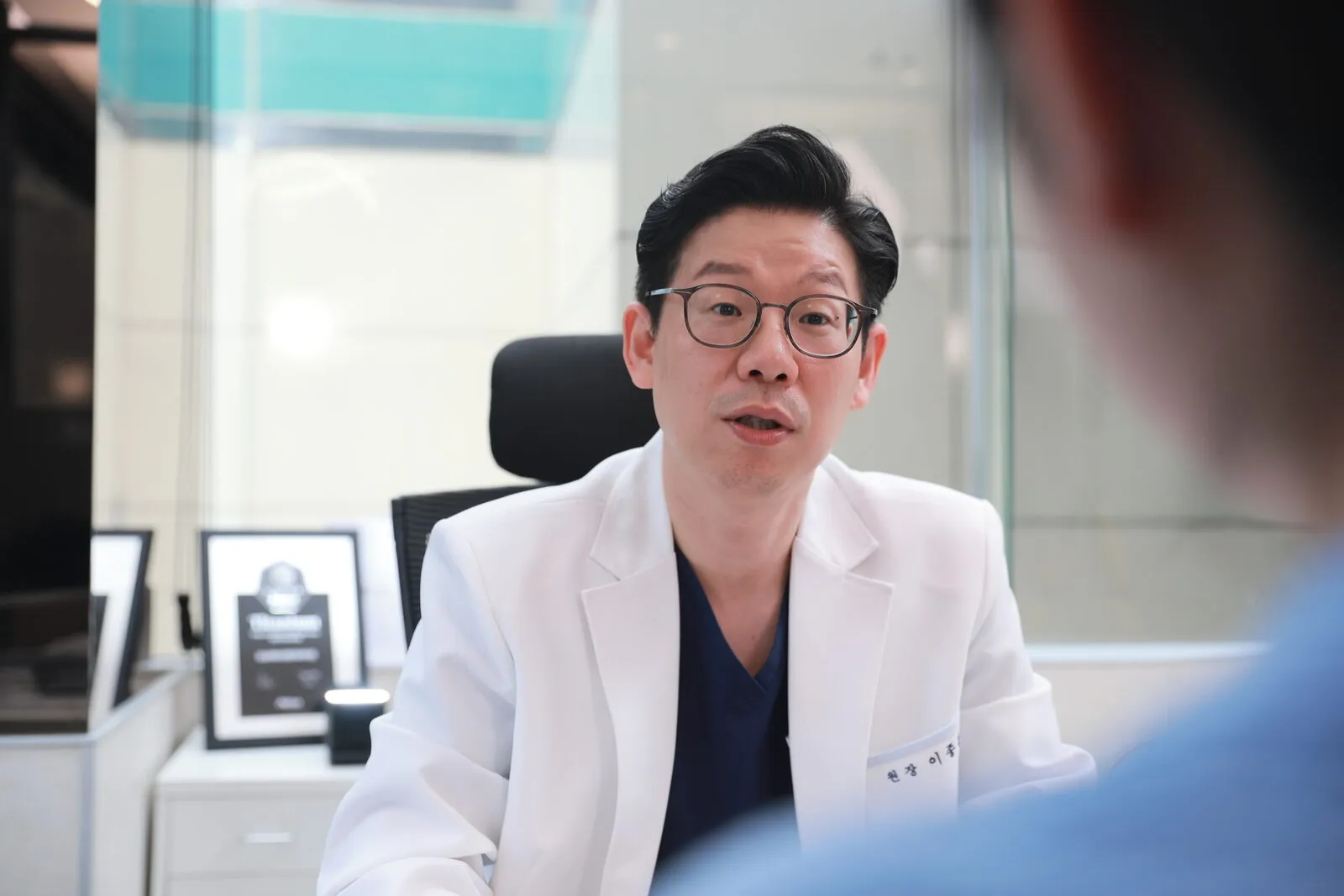 Fillers
How Long Dermal Filler Lasts: Lips Go First, Under-Eyes Last
Hyaluronic acid filler usually lasts six months to a year. Lips sit at the short end, the nose bridge and under-eyes at the long end, and most swelling settles within a week of treatment.
8 minRead → Fillers
Which Dermal Filler Lasts the Longest? Longer Isn't Safer
Non-absorbable PMMA lasts the longest, then poly-L-lactic acid, then hyaluronic acid. For lips, nose and under-eyes I still choose hyaluronic acid, because it is the one common type that can be dissolved.
9 minRead →