
Nose Filler Side Effects: What's Common, What's Serious
 Dr. Jong Hoon Lee · Gangnam HERA8 min read
On this page
Most nose filler side effects are mild: some swelling, redness or tenderness that settles within a few days. The serious one is rare but important — filler blocking a blood vessel, called vascular occlusion — and the nose is one of the facial areas where that risk deserves the most respect. A careful clinic plans around it, recognises the signs early and has the antidote ready.
I'm Dr. Jong Hoon Lee, a doctor at Gangnam HERA in Seoul and a co-author of LIFTINGOLOGY: Science and Clinical Practice in Aesthetic Medicine. Patients considering a non-surgical nose job often ask, "Is nose filler actually safe, or am I taking a big risk?" The honest answer is that it is safe in the right hands, and knowing the difference between normal and abnormal is what keeps it that way.
What side effects are normal after nose filler?
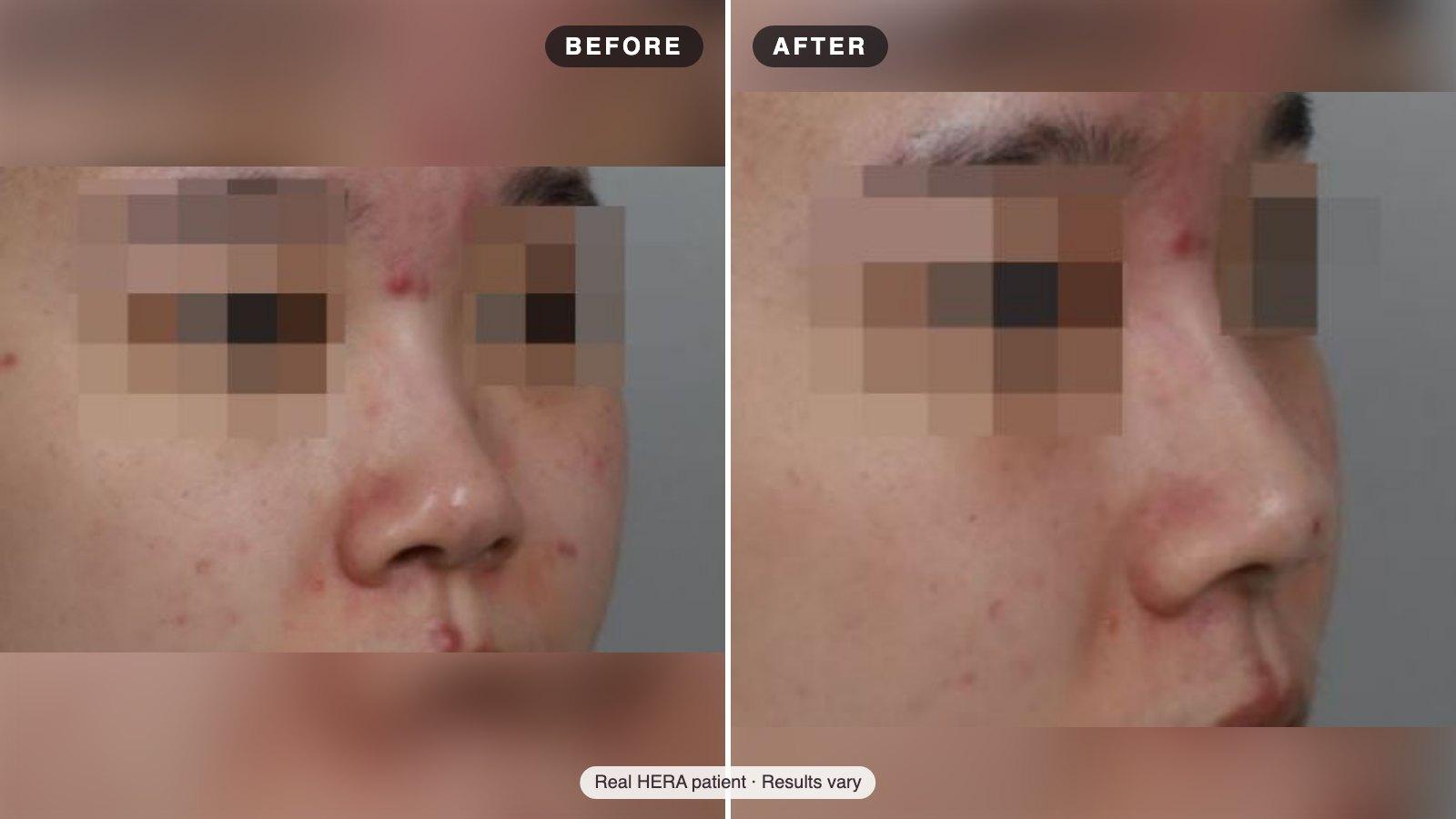
Mild swelling, redness, tenderness and small bruises around the injection points are normal and usually fade within a few days. At HERA, nose filler takes around 30 minutes with numbing cream, and most patients go straight back to their day. The tip can feel slightly tender for a few days, especially if threads were used together with filler to define it.
- Swelling — the bridge can look a little fuller for the first day or two.
- Redness — faint redness at entry points, usually gone within hours to a day.
- Tenderness — touching or wearing glasses may feel uncomfortable for a few days.
- Small bruises — less common, and they fade within a week.
Our guide to nose bridge filler recovery days covers how to plan a trip around this.
What is the most serious side effect of nose filler?
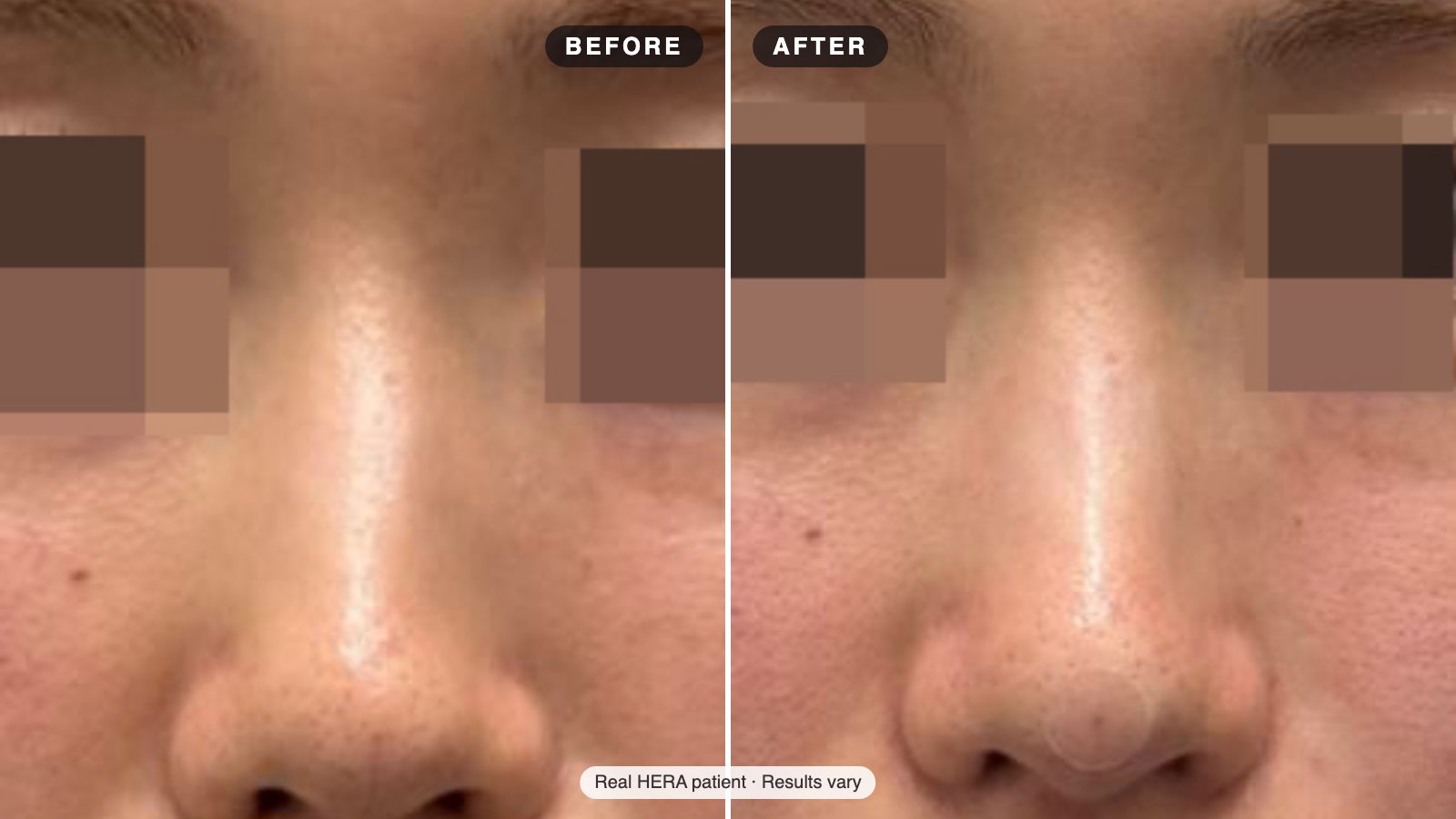
Vascular occlusion — filler blocking or pressing on a blood vessel — is the complication that matters most, and it needs treatment straight away. The nose has a rich network of small vessels close to the surface, and some connect with vessels around the eye. That is why the injector's knowledge of anatomy, the depth of placement and the volume used matter more here than almost anywhere else on the face.
Warning signs usually appear during treatment or within hours:
- severe pain, or pain that gets worse instead of better
- skin on the nose or nearby turning pale, dusky, blue-grey or mottled
- cold skin or slow return of colour when pressed
- any change in vision, which is very rare but an emergency
If any of these happen, the clinic should dissolve the filler immediately with hyaluronidase and follow established emergency steps. This is the main reason we use only hyaluronic acid filler in the nose, and why we keep hyaluronidase ready during every treatment.
Are there long-term nose filler side effects?
The most common long-term problem is a bridge that becomes wider or less defined after repeated filler. Filler placed in large amounts, or topped up too often, can spread sideways over time and flatten the line it was meant to create. Lumps or unevenness can also appear if filler is placed in the wrong layer.
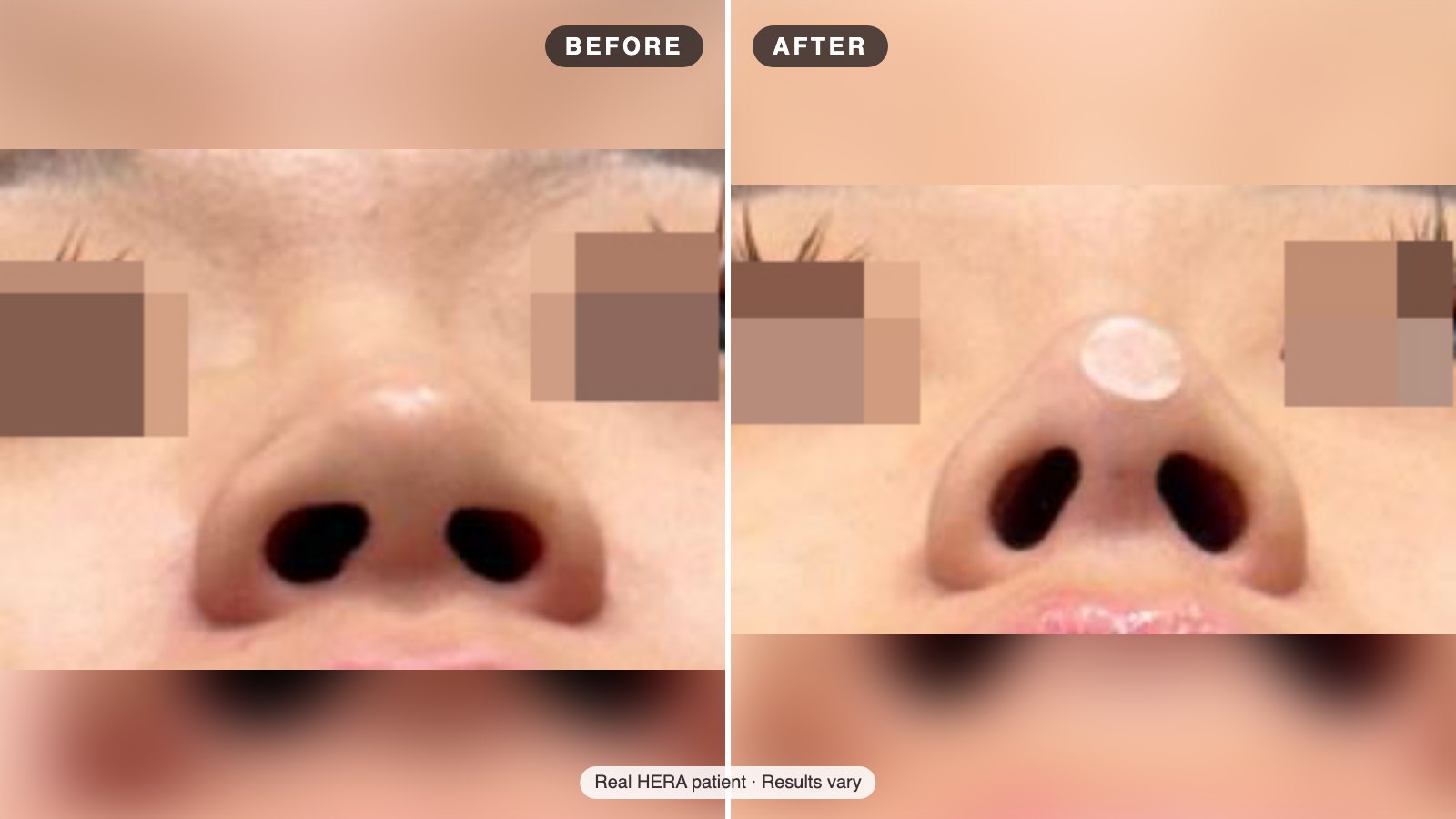
We prefer modest amounts, time between sessions and a review before any top-up. For tip definition, HERA can combine filler with KFDA-approved Mint threads, which adds structure without simply adding more filler. You can read more on our nose filler treatment page.
How does a clinic lower the risk of nose filler side effects?
By choosing the right patient, injecting in the right layer with modest volumes, and being ready to act if something goes wrong. At HERA that means:
- A consultation that checks your nose shape, skin and any previous procedures or rhinoplasty.
- Hyaluronic acid filler only, so it can be dissolved if needed.
- Slow, small-volume injection in the planned layer, watching the skin colour throughout.
- Hyaluronidase ready in the room before the first injection.
- Clear aftercare instructions and an easy way to reach us on WhatsApp after you leave.
Ask any clinic two questions: which filler will you use, and can it be dissolved? If the answer is a permanent or semi-permanent product, think carefully.
Who should be cautious about nose filler?
People who have had rhinoplasty, those with active skin problems on the nose, and anyone pregnant or breastfeeding need extra caution or a different plan. Previous surgery changes the blood supply and the tissue, so tell your doctor about any nose procedure, even years ago. If you are wondering whether filler or surgery suits your goals better, our guide to rhinoplasty versus nose filler walks through the choice.
Nose filler raises a low bridge and refines the profile; it cannot make a large nose smaller or fix a significant hump. Being clear about that before treatment prevents disappointment, and sometimes the honest recommendation is not filler at all.

What should you do after nose filler in Seoul?
Avoid pressure on the nose, including heavy glasses, for about a week, and skip saunas, alcohol and hard exercise for a few days. Do not massage the area unless your doctor asks. Leave a few days before your flight so we can check you if needed. Our nose filler guide covers the treatment in full, and the nose filler price guide explains what affects cost. Real results are in our before and after gallery.
Results typically last around 6–12 months and vary from person to person. What we can promise is a careful plan, an honest view of whether filler suits your nose, and help quickly if you need it.
Book a consultation
Send a front photo and a side profile in daylight on WhatsApp, and tell us about any previous nose treatment. An English interpreter joins every visit, you receive an itemised written estimate before treatment, and international patients pay exactly the same as local patients.
FAQ
Frequently asked questions
Q1What are the common side effects of nose filler?
Mild swelling, redness, tenderness and occasionally a small bruise at the injection points. These usually settle within a few days, and most people return to daily life straight away.Q2What is the most serious nose filler side effect?
Vascular occlusion, where filler blocks or compresses a blood vessel. It is rare but needs treatment immediately. Warning signs include severe or increasing pain, skin turning pale, dusky or blotchy, and, very rarely, changes in vision.Q3Can nose filler side effects be reversed?
Hyaluronic acid filler can be dissolved with an enzyme called hyaluronidase. This is one reason we use hyaluronic acid in the nose, and why a clinic should have it on hand during every treatment.Q4Are there long-term side effects of nose filler?
Repeated or excessive filler can spread and widen the bridge over time, and lumps can form if filler is placed unevenly. Using modest amounts, leaving time between sessions and reviewing results reduces these problems.Q5Who should not get nose filler?
People with active skin infection on the nose, those who are pregnant or breastfeeding, and patients who have had rhinoplasty need special caution or a different plan. Previous surgery changes the blood supply, so tell your doctor about any past nose procedures.
真實經驗
患者怎麼說
由海外患者上傳的影片。




YouTube 上
出發前,先聽聽醫師怎麼說
我們的醫師在鏡頭前講解HERA的主力療程:拉提、玻尿酸與皮膚增強針,讓您在抵達首爾前,就知道會見到誰、他們怎麼思考。
韓語發音 · YouTube 提供自動翻譯字幕
- 6:24玻尿酸

 Dr. Jong · Dr. Jong
- 7:36診所與醫師Dr. Jong · Dr. Jong
- 8:07拉提Dr. Jong
- 5:44拉提Dr. Jong · Dr. Jong
Shorts
一個問題,不到一分鐘
HERA TV
The doctors explain it on camera — then in writing
Each piece is written by the doctor from their own YouTube video: the patient question, why it happens and how we approach it.
 6:56unlicensed filler injections
Unlicensed Filler Injections: The Real Risks, From Two Doctors
Dr. Jong Seon Kim7 min read 6:05wrinkles around mouth treatment
Wrinkles Around the Mouth: A CaHA, Ultherapy and RF Combination
Dr. Jong Hoon Lee7 min read 5:40elf ear filler
Elf Ear Filler: Shaping Flat Ears for a Smaller-Looking Face
Dr. Jong Seon Kim6 min read
HERA Journal
Keep reading
 Fillers
Non-Surgical Nose Lift: Three Clear Days Before You Fly
Nose filler swelling usually eases within two to three days and looks settled by about a week; threads take closer to a week. Treat at least three clear days before your flight, early in the trip.
9 minRead → Fillers
How Long Dermal Filler Lasts: Lips Go First, Under-Eyes Last
Hyaluronic acid filler usually lasts six months to a year. Lips sit at the short end, the nose bridge and under-eyes at the long end, and most swelling settles within a week of treatment.
8 minRead → Fillers
Which Dermal Filler Lasts the Longest? Longer Isn't Safer
Non-absorbable PMMA lasts the longest, then poly-L-lactic acid, then hyaluronic acid. For lips, nose and under-eyes I still choose hyaluronic acid, because it is the one common type that can be dissolved.
9 minRead →