Temple Filler Before and After: What Realistically Changes
 Dr. Jong Seon Kim · Director, Gangnam HERA6 min read
On this page
I'm Dr. Jong Seon Kim, a plastic surgeon at Gangnam HERA in Seoul and a board member of the International Petit Medical Society. Before booking temple filler, most patients ask to see results first — "What will I actually look like after?" That is the right question, and it deserves a realistic answer rather than a perfect photograph.
What does temple filler change, before and after?
It fills the hollow at the side of the upper face, so the line from forehead to cheekbone reads as one smooth curve instead of dipping inwards. When the temples are hollow, the face can look narrower at the top, the cheekbones can look sharper than you would like, and the eyes can look tired. Restoring that volume softens all three.
The change is noticeable, but it is quiet. People rarely say "you had filler"; they more often say you look rested. That is the result I aim for.

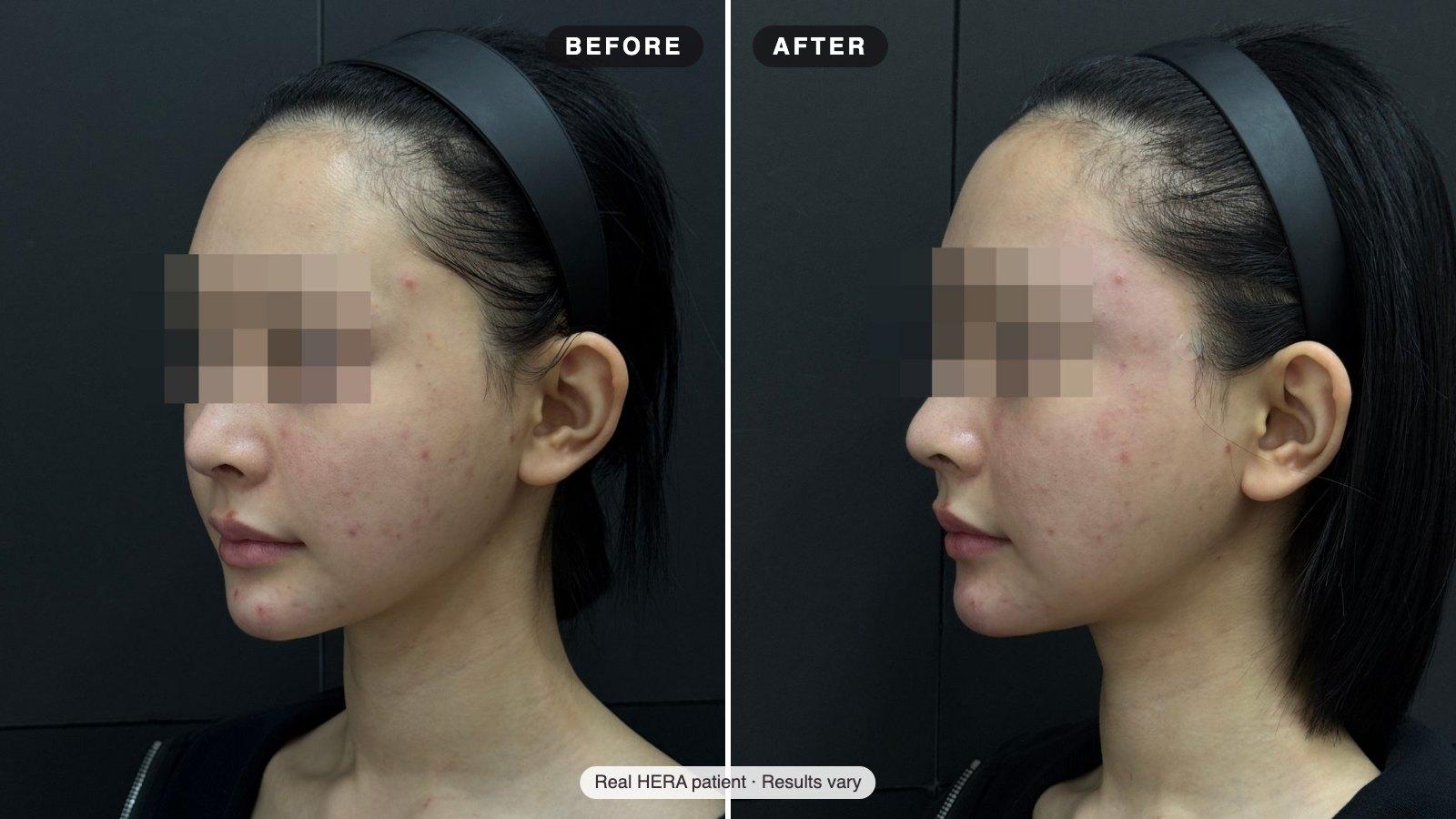
Where can I see real temple filler before-and-after photos?
In our before-and-after gallery, which shows real HERA patients. We do not use illustrations or AI-generated images to show results, because a picture that is not a real patient is not a result.
When you look at any before-and-after, check three things: the lighting is the same in both photographs, the angle is the same, and the expression is neutral. Temple hollows change dramatically with light from above, so a flattering "after" photograph can exaggerate what filler did.
When do you see the result?
Straight away — with swelling on top for the first few days. The volume is visible immediately after the injection. Mild swelling, redness or a small bruise can appear and usually settles within two to three days.
| When | What you usually notice |
|---|---|
| Same day | Visible volume; the area can feel slightly full or tender |
| Days 2–3 | Swelling and any bruising usually settle |
| About two weeks | The filler has settled; this is when I judge the final shape |
| Months later | Gradual softening as the filler is absorbed |
I review the shape once the area has settled, not on the day, because early swelling can hide small differences between sides.
How long does temple filler last?
Hyaluronic-acid filler generally lasts around 6 to 12 months for domestic products and 12 to 18 months for imported ones, depending on the area and your metabolism. Results vary from person to person. The change fades gradually rather than disappearing overnight, and many patients top up before it has fully gone.
What makes a good temple result — and a bad one?
A good result is one you cannot point to. The side of the face looks continuous, the brow and cheekbone are balanced, and nothing looks puffy when you smile or chew.
- Too much volume makes the upper face look wide or swollen.
- Filler in the wrong layer can show as a ridge or a visible edge.
- Ignoring the rest of the face — a temple filled in isolation can make an unaddressed forehead or cheek look more hollow by contrast.
That is why I assess the forehead, temples and cheeks together. Our guides to forehead filler and why cheek filler goes wrong explain those neighbouring areas.
What patients ask me next
"Is temple filler painful?"
Topical ointment, or local anaesthesia where needed, keeps it comfortable; most patients describe pressure more than pain.
"Can it be undone?"
Yes. Hyaluronic-acid filler can be dissolved if an adjustment is ever needed.
"How do I know if I need it?"
Look at yourself from the front in overhead light. If there is a clear dip between the outer brow and the hairline, you are likely a candidate. A photograph from the front and the side lets me tell you properly. Our temple filler guide covers the assessment in detail.
What does the visit look like on the day?
Around half an hour in the chair, most of it planning rather than injecting. A doctor looks at your temples, forehead and cheeks together in overhead light, marks where the hollow actually sits, and agrees the amount with you before anything begins. Topical ointment or local anaesthesia is applied, the filler is placed and shaped, and you check the result in the mirror with me before you leave.
You can usually go straight back to your day, including sightseeing. I ask patients to avoid pressing on or massaging the area for the first days unless I have shown them how, and to message us with a photograph if one side looks clearly different once the swelling has gone.

The honest limits
Temple filler restores volume; it does not lift a sagging face, and it is not permanent. If your main concern is sagging along the jaw, a lifting treatment will do more than filler at the temples. The clinical detail for this area is on our facial filler page.
Book a consultation
If you would like to know what temple filler would change for you, send a photograph from the front and from the side. We will arrange a consultation in Gangnam, or a photo consultation first if you are still abroad. An English interpreter joins every visit, and you receive an itemised written estimate before anything begins — international and local patients pay exactly the same.
FAQ
Frequently asked questions
Q1What does temple filler change?
It fills the hollow at the side of the upper face so the line from forehead to cheekbone reads as one smooth curve. The face usually looks softer and more rested rather than obviously treated.Q2When do you see temple filler results?
Immediately, with mild swelling for the first few days that usually settles within two to three days. The final shape is best judged at about two weeks.Q3How long does temple filler last?
At HERA, domestic hyaluronic-acid fillers generally last around 6–12 months and imported ones 12–18 months, varying with the area and metabolism. Results vary from person to person.Q4Where can I see real temple filler before and after photos?
HERA's before-and-after gallery shows real patient cases. We do not use illustrations or AI images to show results.Q5Can temple filler be reversed?
Yes. Hyaluronic-acid filler can be dissolved if an adjustment is ever needed.
真實經驗
患者怎麼說
由海外患者上傳的影片。




YouTube 上
出發前,先聽聽醫師怎麼說
我們的醫師在鏡頭前講解HERA的主力療程:拉提、玻尿酸與皮膚增強針,讓您在抵達首爾前,就知道會見到誰、他們怎麼思考。
韓語發音 · YouTube 提供自動翻譯字幕
- 6:24玻尿酸

 Dr. Jong · Dr. Jong
- 7:36診所與醫師Dr. Jong · Dr. Jong
- 8:07拉提Dr. Jong
- 5:44拉提Dr. Jong · Dr. Jong
Shorts
一個問題,不到一分鐘
HERA TV
The doctors explain it on camera — then in writing
Each piece is written by the doctor from their own YouTube video: the patient question, why it happens and how we approach it.
 6:56unlicensed filler injections
Unlicensed Filler Injections: The Real Risks, From Two Doctors
Dr. Jong Seon Kim7 min read 6:05wrinkles around mouth treatment
Wrinkles Around the Mouth: A CaHA, Ultherapy and RF Combination
Dr. Jong Hoon Lee7 min read 5:40elf ear filler
Elf Ear Filler: Shaping Flat Ears for a Smaller-Looking Face
Dr. Jong Seon Kim6 min read
HERA Journal
Keep reading
 Fillers
Non-Surgical Nose Lift: Three Clear Days Before You Fly
Nose filler swelling usually eases within two to three days and looks settled by about a week; threads take closer to a week. Treat at least three clear days before your flight, early in the trip.
9 minRead → Fillers
How Long Dermal Filler Lasts: Lips Go First, Under-Eyes Last
Hyaluronic acid filler usually lasts six months to a year. Lips sit at the short end, the nose bridge and under-eyes at the long end, and most swelling settles within a week of treatment.
8 minRead → Fillers
Which Dermal Filler Lasts the Longest? Longer Isn't Safer
Non-absorbable PMMA lasts the longest, then poly-L-lactic acid, then hyaluronic acid. For lips, nose and under-eyes I still choose hyaluronic acid, because it is the one common type that can be dissolved.
9 minRead →